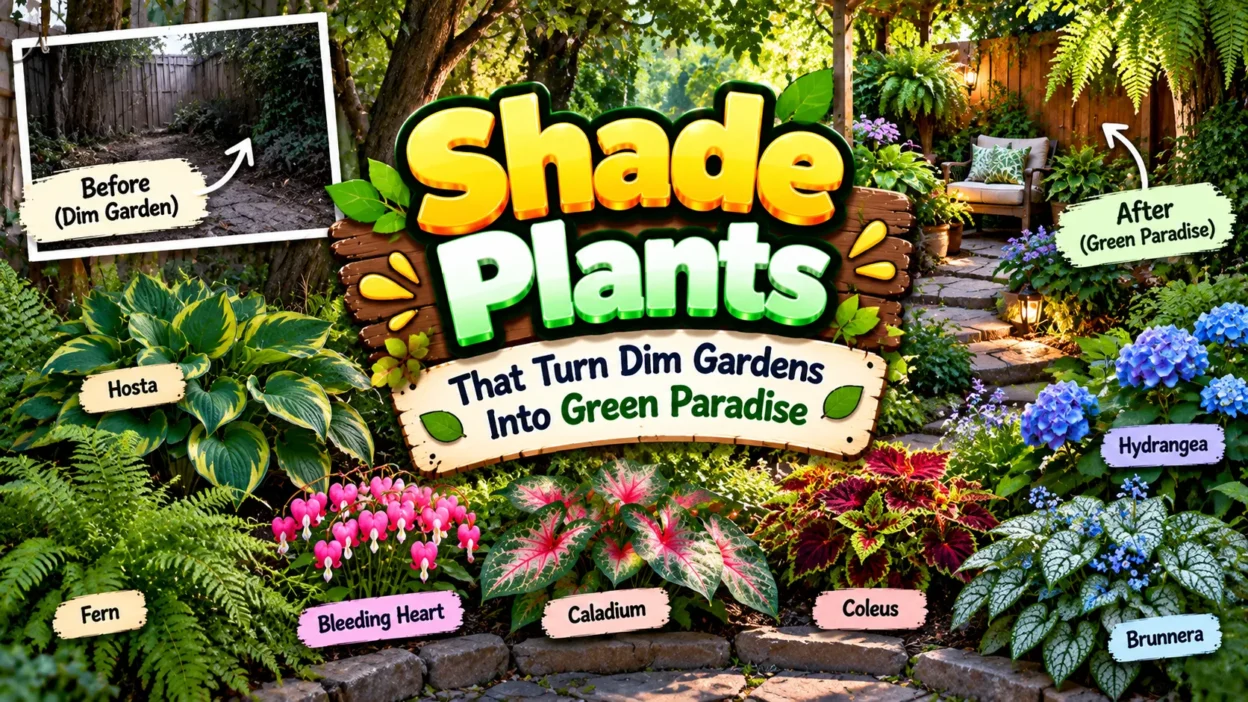
Shade plants can transform those dark corners of your garden into beautiful, leafy spaces filled with color, texture, and life. 🌿 If your yard receives limited sunlight, you can still grow an impressive collection of flowers, ornamental foliage, ground covers, and attractive container plants. The secret lies in choosing varieties that match your available light, soil conditions, and climate. Some plants thrive beneath mature trees, while others prefer the gentle morning sun or bright indirect light near a shaded patio.
Fortunately, you have plenty of options beyond ordinary green foliage. Colorful caladiums, elegant hostas, delicate bleeding hearts, and flowering impatiens can bring personality to shaded garden beds. Meanwhile, ferns and heucheras provide interesting textures that make landscape designs feel fuller and more natural. You can also find shade-tolerant shrubs and climbing plants for larger spaces. Whether you have a small balcony, a north-facing entrance, or a woodland backyard, the right selections can make your outdoor space feel welcoming. In this guide, you’ll discover plant names for different garden styles, growing conditions, and decorative purposes. You’ll also find ideas for low-light houseplants, flowering varieties, evergreen ground covers, and plants that work well beneath trees. Use these suggestions to build a garden that suits your space without fighting its natural conditions. With thoughtful planning, even a heavily shaded yard can become a refreshing green retreat.
Which Shade Plants Grow Best in Low-Light Gardens? 🌱
The best shade plants include hostas, ferns, astilbes, coral bells, bleeding hearts, and impatiens. These varieties thrive in partial shade or filtered light, depending on the species.
For deeper shade, consider Japanese painted ferns, lungwort, and certain evergreen ground covers. Match each plant to your soil moisture, local climate, and available sunlight for healthier growth.
🌿 Beautiful Shade Plants for Elegant Garden Spaces
Beautiful shade-loving plants add texture, color, and depth to gardens that receive limited direct sunlight. These choices work especially well in decorative borders, woodland gardens, and shaded landscape beds.
- Hosta
- Japanese Painted Fern
- Autumn Fern
- Lady Fern
- Maidenhair Fern
- Christmas Fern
- Ostrich Fern
- Holly Fern
- Cinnamon Fern
- Royal Fern
- Wood Fern
- Tassel Fern
- Japanese Forest Grass
- Coral Bells
- Lungwort
- Foamflower
- Astilbe
- Bleeding Heart
- Solomon’s Seal
- False Solomon’s Seal
- Brunnera
- Bergenia
- Epimedium
- Hellebore
- Toad Lily
- Jack-in-the-Pulpit
- Trillium
- Wild Ginger
- Mayapple
- Virginia Bluebells
- Japanese Anemone
- Meadow Rue
- Goat’s Beard
- Leopard Plant
- Sweet Woodruff
- Japanese Spurge
- Barrenwort
🌸 Flowering Shade Plants for Colorful Garden Beds
Flowering shade plants bring color to areas where sun-loving flowers may struggle. Choose varieties with different bloom times to enjoy flowers from spring through autumn.
- Impatiens
- New Guinea Impatiens
- Wax Begonia
- Tuberous Begonia
- Fuchsia
- Torenia
- Browallia
- Wishbone Flower
- Bleeding Heart
- Dutchman’s Breeches
- Siberian Bugloss
- Virginia Bluebells
- Lungwort
- Astilbe
- Hellebore
- Toad Lily
- Japanese Anemone
- Foxglove
- Columbine
- Primrose
- Polyanthus Primrose
- Cyclamen
- Lily of the Valley
- Foamflower
- Bigleaf Hydrangea
- Oakleaf Hydrangea
- Mountain Hydrangea
- Smooth Hydrangea
- Climbing Hydrangea
- Hardy Geranium
- Woodland Phlox
- Jacob’s Ladder
- Shooting Star
- Fairy Wings
- Japanese Iris
- Cardinal Flower
- Monkey Flower
- Turtlehead
🍃 Shade Plants With Stunning Foliage
Foliage plants keep shaded gardens attractive even when flowers fade. Their contrasting leaf shapes, patterns, and colors create a layered landscape with plenty of visual interest.
- Caladium
- Rex Begonia
- Elephant Ear
- Hostas
- Heuchera
- Heucherella
- Brunnera
- Lungwort
- Japanese Painted Fern
- Autumn Fern
- Painted Lady Fern
- Japanese Forest Grass
- Golden Hakone Grass
- Persian Shield
- Coleus
- Polka Dot Plant
- Aluminum Plant
- Nerve Plant
- Peacock Plant
- Rattlesnake Plant
- Prayer Plant
- Stromanthe
- Ctenanthe
- Chinese Evergreen
- Cast Iron Plant
- Heartleaf Philodendron
- Satin Pothos
- English Ivy
- Purple Shamrock
- Leopard Plant
- Bergenia
- Creeping Jenny
- Sweet Potato Vine
- Creeping Fig
- Japanese Aralia
- Himalayan Maidenhair Fern
- Birds Nest Fern
- Bird’s Nest Anthurium
🌱 Shade Plants for Ground Cover and Bare Soil
Ground-cover plants help fill empty spaces beneath trees, along shaded paths, and around larger shrubs. Many spread gradually, creating a green carpet that reduces exposed soil and softens garden edges.
- Sweet Woodruff
- Japanese Spurge
- Bunchberry
- Wild Ginger
- Creeping Jenny
- Allegheny Spurge
- Bugleweed
- Creeping Thyme
- Periwinkle
- Pachysandra
- English Ivy
- Lamium
- Dead Nettle
- Foamflower
- Green-and-Gold
- Goldenstar
- Lily of the Valley
- Epimedium
- Barrenwort
- Japanese Forest Grass
- Mondo Grass
- Dwarf Mondo Grass
- Liriope
- Partridgeberry
- Wintergreen
- Canadian Wild Ginger
- Creeping Mahonia
- Siberian Cypress
- Bearberry
- Spotted Wintergreen
- Wild Strawberry
- Creeping Raspberry
- Irish Moss
- Scotch Moss
- Ajuga
- Bishop’s Weed
- Blue Star Creeper
🪴 Shade Plants for Pots and Container Gardens
Container gardening makes it easier to decorate shaded porches, balconies, patios, and entrances. Select plants with similar watering needs, and use pots with drainage holes to prevent soggy roots.
- Impatiens
- Wax Begonia
- Rex Begonia
- Caladium
- Coleus
- Fuchsia
- Torenia
- Browallia
- Hosta
- Coral Bells
- Japanese Painted Fern
- Maidenhair Fern
- Autumn Fern
- Boston Fern
- Kimberly Queen Fern
- Asparagus Fern
- Cast Iron Plant
- Chinese Evergreen
- Peace Lily
- Pothos
- Heartleaf Philodendron
- Spider Plant
- Prayer Plant
- Calathea
- Stromanthe
- Nerve Plant
- Polka Dot Plant
- English Ivy
- Persian Shield
- Purple Shamrock
- Tuberous Begonia
- New Guinea Impatiens
- Wishbone Flower
- Japanese Forest Grass
- Creeping Jenny
- Leopard Plant
- Bird’s Nest Fern
- Parlor Palm
🌳 Shade Plants That Thrive Beneath Trees
Growing plants beneath trees can be challenging because tree roots compete for moisture and nutrients. Choose adaptable species, protect the roots, and avoid digging deeply around established trees.
- Wild Ginger
- Christmas Fern
- Lady Fern
- Christmas Rose
- Hosta
- Foamflower
- Lungwort
- Sweet Woodruff
- Bunchberry
- Trillium
- Virginia Bluebells
- Solomon’s Seal
- False Solomon’s Seal
- Mayapple
- Jack-in-the-Pulpit
- Dutchman’s Breeches
- Bloodroot
- Woodland Phlox
- Wild Columbine
- Hepatica
- Jacob’s Ladder
- Creeping Phlox
- Epimedium
- Japanese Spurge
- Pachysandra
- Allegheny Spurge
- Coral Bells
- Wild Geranium
- Goldenstar
- Green-and-Gold
- Partridgeberry
- Wintergreen
- Oakleaf Hydrangea
- Japanese Forest Grass
- Dwarf Mondo Grass
- Ostrich Fern
- Brunnera
- Toad Lily
🌼 Shade Plants With Long-Lasting Garden Appeal
Long-lasting garden appeal comes from mixing plants with different bloom periods, foliage colors, and seasonal features. These selections help maintain interest when individual flowers finish blooming.
- Hellebore
- Hosta
- Coral Bells
- Japanese Forest Grass
- Autumn Fern
- Christmas Fern
- Cast Iron Plant
- Bergenia
- Lungwort
- Brunnera
- Japanese Spurge
- Pachysandra
- Liriope
- Mondo Grass
- Oakleaf Hydrangea
- Smooth Hydrangea
- Climbing Hydrangea
- Japanese Aralia
- Skimmia
- Sarcococca
- Aucuba
- Mahonia
- Sweet Box
- Japanese Pieris
- Mountain Laurel
- Rhododendron
- Azalea
- Andromeda
- Yew
- Leucothoe
- Wintergreen
- English Ivy
- Creeping Mahonia
- Japanese Holly
- Boxwood
- Camellia
- Tassel Fern
- Japanese Holly Fern
🌿 Evergreen Shade Plants for Year-Round Greenery
Evergreen shade plants retain much of their foliage throughout the year, depending on the species and climate. They are useful for creating structure, covering bare soil, and maintaining color during colder months.
- Cast Iron Plant
- Christmas Fern
- Holly Fern
- Tassel Fern
- Japanese Holly Fern
- Japanese Spurge
- Pachysandra
- English Ivy
- Sweet Box
- Japanese Skimmia
- Aucuba
- Japanese Aralia
- Mountain Laurel
- Rhododendron
- Japanese Pieris
- Leucothoe
- Mahonia
- Yew
- Boxwood
- Japanese Holly
- Siberian Cypress
- Creeping Mahonia
- Wintergreen
- Bearberry
- Mondo Grass
- Dwarf Mondo Grass
- Liriope
- Bergenia
- Epimedium
- Barrenwort
- Japanese Forest Grass
- Evergreen Azalea
- Andromeda
- Sarcococca
- Oregon Grape
- Partridgeberry
- Allegheny Spurge
🌺 Shade Plants for Tropical and Unfamiliar Garden Styles
Tropical-looking shade plants create a lush atmosphere with oversized leaves, bright patterns, and unusual textures. Many prefer warm conditions, so check winter hardiness before planting them outdoors.
- Caladium
- Elephant Ear
- Rex Begonia
- Persian Shield
- Peacock Plant
- Rattlesnake Plant
- Prayer Plant
- Stromanthe
- Ctenanthe
- Chinese Evergreen
- Peace Lily
- Bird’s Nest Fern
- Staghorn Fern
- Boston Fern
- Kimberly Queen Fern
- Asparagus Fern
- Cast Iron Plant
- Heartleaf Philodendron
- Satin Pothos
- Golden Pothos
- Monstera
- Parlor Palm
- Kentia Palm
- Bamboo Palm
- Areca Palm
- Lady Palm
- Chinese Fan Palm
- Anthurium
- Flamingo Flower
- Nerve Plant
- Polka Dot Plant
- Aluminum Plant
- Spider Plant
- Purple Shamrock
- Japanese Aralia
- Fatsia
- Begonia Maculata
- Tradescantia Zebrina
🌷 Shade Plants for Small Gardens and Narrow Spaces
Small shaded gardens benefit from compact plants that provide color without overwhelming walkways or nearby structures. Choose varieties with manageable growth habits and consider their mature size before planting.
- Miniature Hosta
- Blue Mouse Ears Hosta
- Patriot Hosta
- Frances Williams Hosta
- Japanese Painted Fern
- Maidenhair Fern
- Autumn Fern
- Dwarf Mondo Grass
- Liriope
- Foamflower
- Coral Bells
- Heucherella
- Brunnera
- Lungwort
- Epimedium
- Barrenwort
- Sweet Woodruff
- Japanese Spurge
- Creeping Jenny
- Bugleweed
- Lamium
- Primrose
- Cyclamen
- Toad Lily
- Dwarf Astilbe
- Fairy Wings
- Japanese Forest Grass
- Golden Hakone Grass
- Miniature Begonia
- Wax Begonia
- Impatiens
- Torenia
- Browallia
- Nerve Plant
- Polka Dot Plant
- Parlor Palm
- Bird’s Nest Fern
- Cast Iron Plant
🌿 Shade Plants for Moist and Woodland Gardens
Moist woodland gardens suit plants that enjoy rich soil, organic matter, and consistent moisture. These varieties can create a natural landscape beneath trees or beside shaded garden paths.
- Ostrich Fern
- Cinnamon Fern
- Royal Fern
- Lady Fern
- Japanese Painted Fern
- Maidenhair Fern
- Astilbe
- Cardinal Flower
- Turtlehead
- Monkey Flower
- Foamflower
- Lungwort
- Bleeding Heart
- Virginia Bluebells
- Trillium
- Jack-in-the-Pulpit
- Mayapple
- Dutchman’s Breeches
- Bloodroot
- Woodland Phlox
- Solomon’s Seal
- False Solomon’s Seal
- Goat’s Beard
- Meadow Rue
- Primrose
- Japanese Iris
- Toad Lily
- Hosta
- Brunnera
- Wild Ginger
- Bunchberry
- Wintergreen
- Sweet Woodruff
- Japanese Forest Grass
- Leopard Plant
- Ligularia
- Siberian Bugloss
- Jacob’s Ladder
🌵 Shade-Tolerant Plants for Dry Garden Corners
Dry shade often develops beneath mature trees, roof overhangs, or sheltered walls. These areas need plants that tolerate limited sunlight and occasional moisture shortages once established.
- Cast Iron Plant
- Japanese Spurge
- Allegheny Spurge
- Epimedium
- Barrenwort
- Christmas Fern
- Autumn Fern
- Holly Fern
- Japanese Aucuba
- Japanese Aralia
- Sweet Box
- Japanese Mahonia
- Creeping Mahonia
- Yew
- Boxwood
- Japanese Holly
- English Ivy
- Pachysandra
- Bergenia
- Bigroot Geranium
- Wild Ginger
- Solomon’s Seal
- False Solomon’s Seal
- Hosta
- Lungwort
- Brunnera
- Coral Bells
- Heucherella
- Japanese Forest Grass
- Dwarf Mondo Grass
- Liriope
- Lily of the Valley
- Lamium
- Periwinkle
- Japanese Anemone
- Hellebore
- Leucothoe
- Mountain Laurel
🪻 Shade Plants for Colorful Leaves and Contrasting Textures
Contrasting foliage makes a shaded landscape feel vibrant without relying entirely on flowers. Combine large leaves with fine fronds, colorful edges, and contrasting shades of green for a layered appearance.
- Patriot Hosta
- June Hosta
- Sum and Substance Hosta
- Blue Angel Hosta
- Fire Chief Heuchera
- Palace Purple Heuchera
- Lime Marmalade Heuchera
- Caramel Heuchera
- Obsidian Heuchera
- Silver Scrolls Heuchera
- Japanese Painted Fern
- Ghost Fern
- Autumn Fern
- Lady Fern
- Maidenhair Fern
- Golden Hakone Grass
- Japanese Forest Grass
- Rex Begonia
- Escargot Begonia
- Iron Cross Begonia
- Caladium White Christmas
- Caladium Red Flash
- Caladium Pink Beauty
- Persian Shield
- Polka Dot Plant
- Nerve Plant
- Aluminum Plant
- Peacock Plant
- Rattlesnake Plant
- Prayer Plant
- Stromanthe Triostar
- Ctenanthe Burle Marxii
- Satin Pothos
- Silver Inch Plant
- Purple Shamrock
- Leopard Plant
- Brunnera Jack Frost
- Lungwort Raspberry Splash
- Coleus
🌱 Shade Plants for Beginners and Easy Garden Care
Beginner-friendly shade plants are forgiving choices for gardeners who want attractive results without complicated maintenance. Start with dependable varieties, then expand your collection as you learn how your garden handles moisture and seasonal changes.
- Hosta
- Cast Iron Plant
- Christmas Fern
- Autumn Fern
- Japanese Painted Fern
- Impatiens
- Wax Begonia
- New Guinea Impatiens
- Coral Bells
- Astilbe
- Lungwort
- Brunnera
- Foamflower
- Sweet Woodruff
- Japanese Spurge
- Pachysandra
- Liriope
- Mondo Grass
- Japanese Forest Grass
- Hellebore
- Bleeding Heart
- Solomon’s Seal
- Lamium
- Bugleweed
- English Ivy
- Peace Lily
- Chinese Evergreen
- Pothos
- Heartleaf Philodendron
- Spider Plant
- Parlor Palm
- Bird’s Nest Fern
- Nerve Plant
- Coleus
- Caladium
- Fuchsia
- Torenia
- Bigleaf Hydrangea
🌤️ How to Choose the Right Shade Plants for Your Garden
Choosing suitable shade plants starts with understanding the light your garden receives. Full shade usually means less than three hours of direct sunlight daily, although bright indirect light can still support many species. Partial shade generally includes around three to six hours of sunlight, often during the morning or late afternoon. Dappled shade occurs when sunlight filters through tree branches. Observe your garden at different times before buying plants. Also, consider soil drainage, local temperatures, humidity, and the mature size of each variety. Plants such as hostas and astilbes appreciate moisture, while cast iron plants and epimediums can tolerate drier conditions once established. Native plants often provide an additional advantage because they may already suit your region’s growing conditions.
🪴 How to Care for Shade Plants and Encourage Healthy Growth
Shade plants still need the right balance of water, nutrients, and airflow. Avoid assuming every low-light plant needs frequent watering. Soil beneath trees can become surprisingly dry because tree roots absorb available moisture. Check the soil before watering, and use compost to improve its structure when appropriate. Apply mulch to help retain moisture, but keep it away from plant crowns and stems. Feed plants according to their individual needs instead of applying excessive fertilizer. Container plants require special attention because pots can dry out faster than garden beds. Remove damaged leaves, watch for slugs and fungal problems, and provide adequate spacing. Finally, remember that some plants listed for shade tolerate only bright indirect light rather than genuinely dark conditions. Even shade-loving varieties need enough usable light to grow well.
🌿 How to Design a Beautiful Garden With Shade-Loving Plants
A successful shade garden combines different heights, leaf shapes, and seasonal features. Place taller ferns and shrubs toward the back of a border, then arrange medium-sized hostas and flowering perennials in the middle. Use ground covers along edges to create a smooth transition between planting beds and pathways. For a colorful design, combine silver-leaved brunnera with dark heuchera and fresh green hostas. Add astilbes or impatiens where the available light supports flowering. In containers, mix a central foliage plant with trailing varieties for a fuller appearance. Repeat a few favorite plants throughout the space to create visual unity. Above all, choose plants that suit your soil and climate. A thoughtful combination of evergreen foliage, seasonal flowers, and varied textures will make shaded spaces feel intentional rather than neglected.
Frequently Asked Questions About Shade Plants
Which shade plants are easiest for beginners?
Hostas, cast iron plants, Christmas ferns, and Chinese evergreens are good starting points. Many tolerate lower light and need relatively simple care when their watering and soil requirements are met.
Start with just a few varieties and observe how they respond to your garden. This approach helps you identify suitable plants before expanding your collection.
Can shade plants grow without direct sunlight?
Yes, many shade plants grow well without direct sunlight if they receive enough indirect or filtered light. Examples include hostas, ferns, peace lilies, and Chinese evergreens.
However, no ordinary garden plant thrives in complete darkness. If a corner receives almost no natural light, consider supplemental grow lighting or a decorative artificial plant.
Which flowering plants grow well in the shade?
Impatiens, begonias, astilbes, bleeding hearts, and hellebores are popular flowering options for shaded areas. Their light requirements vary, so check the specific variety before planting.
Some prefer moist woodland soil, while others grow better in containers with carefully controlled watering. Combining plants with different bloom seasons can extend garden color.
What shade plants grow well beneath large trees?
Hostas, wild ginger, certain ferns, epimediums, and sweet woodruff can work beneath trees. However, success depends on the tree’s canopy, root competition, soil conditions, and regional climate.
Plant carefully to avoid damaging established tree roots. Water new plants regularly while they establish, especially during dry weather.
Are there shade plants that stay green all year?
Yes, several shade-tolerant plants retain their foliage throughout the year in suitable climates. Examples include cast iron plants, Japanese spurge, certain ferns, sweet box, and some evergreen shrubs.
Winter hardiness varies by species and location. Check your local growing zone before choosing evergreen plants for outdoor beds.
Can I grow shade plants in pots indoors?
Absolutely. Chinese evergreens, pothos, peace lilies, parlor palms, and many ferns can grow in indoor containers with suitable light and moisture.
Use pots with drainage holes and a well-draining potting mix. Keep plants away from harsh direct sunlight when their leaves are sensitive to it.
How often should I water shade plants?
Watering frequency depends on the plant, soil, temperature, and container size. Many shade plants prefer evenly moist soil, but others tolerate periods of dryness.
Check the upper layer of soil before watering. If it remains wet for too long, reduce watering and improve drainage to protect the roots.
Do shade plants need fertilizer?
Shade plants may benefit from fertilizer during active growth, but their needs vary. Compost can improve soil structure and provide nutrients for many garden varieties.
Follow the plant’s recommended feeding schedule and avoid overfertilizing. Excess nutrients can encourage weak growth or damage roots, especially in containers.
Conclusion 🌿
The right shade plants can turn a dim garden, sheltered patio, or tree-covered yard into a beautiful green retreat. From flowering impatiens and colorful caladiums to elegant ferns and dependable evergreen shrubs, there are options for nearly every shaded space. Start by identifying your light levels, soil moisture, and local climate. Then combine different foliage shapes, plant heights, and flowering seasons to create a balanced design. With thoughtful selection and consistent care, shade plants can deliver lasting beauty without demanding full sunlight. Choose varieties that suit your conditions, and enjoy making the most of every corner of your garden.

James Anderson is a passionate floral writer and lifestyle content creator with a love for nature, creativity, and meaningful moments. With a keen eye for beauty and detail, he shares insights on flowers, gifting ideas, floral trends, and special occasion inspiration. Through Florenzay, James aims to help people express emotions and create unforgettable memories through the timeless charm of flowers. 🌸