
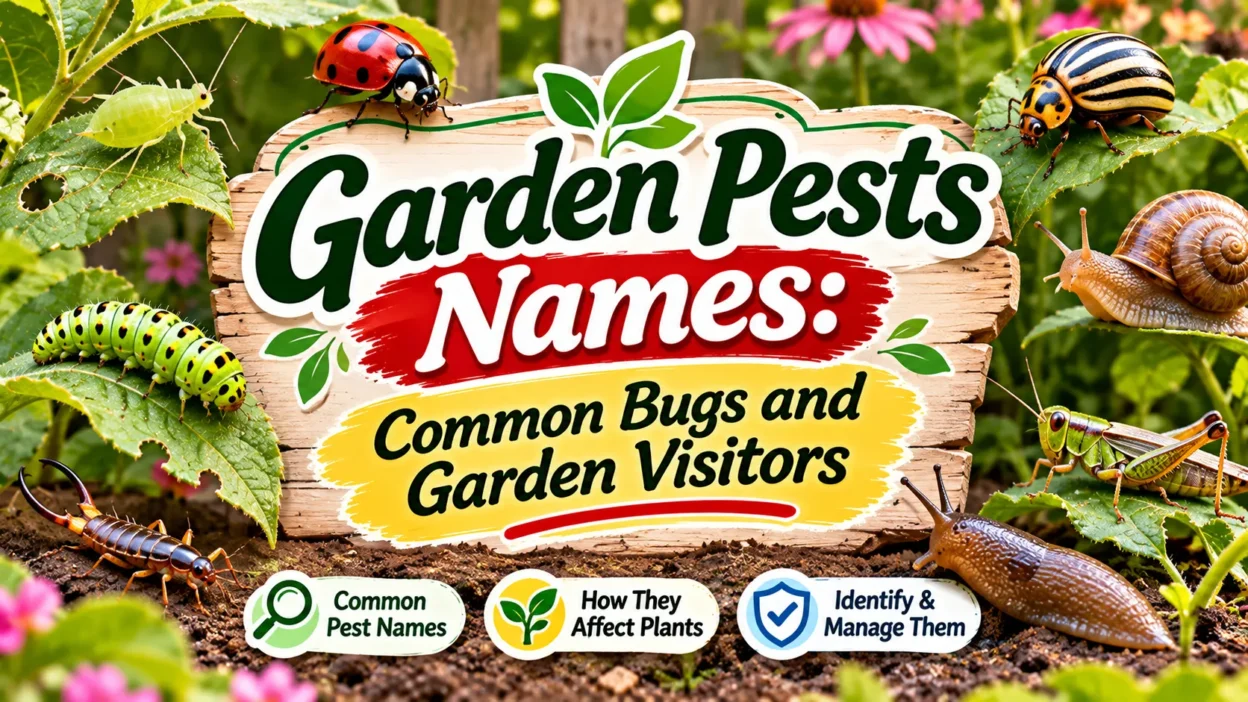
Garden pests can turn a beautiful, healthy garden into a frustrating place for plant lovers. These unwanted visitors include tiny insects, crawling bugs, hungry caterpillars, and destructive underground creatures. Some damage leaves, while others attack flowers, roots, stems, and fruits. Learning their names helps gardeners understand what they might discover among their plants. It also makes identifying garden insects much easier. Whether you grow vegetables, maintain flower beds, or care for indoor plants, knowing common garden pest names gives you a useful starting point. You can recognize familiar insects and understand which ones deserve attention.
However, not every insect in your garden causes trouble. Some feed on harmful pests, pollinate flowers, or improve soil conditions. Therefore, understanding the difference between beneficial insects and destructive garden bugs matters. This guide explores hundreds of garden pests names, including common plant pests, vegetable garden insects, flower pests, crawling bugs, and soil-dwelling creatures. You will also discover names of beetles, worms, mites, and other unwanted garden visitors. These categories make identification easier for beginners and experienced gardeners alike. If you have noticed holes in leaves, sticky plant surfaces, damaged roots, or unusual spots, this collection can help. Explore the names below and become more familiar with the tiny creatures living around your garden.
Which Garden Pests Commonly Damage Plants and Flowers?
Garden pests are insects and other small creatures that damage plants, flowers, fruits, and vegetables. Common examples include aphids, spider mites, whiteflies, caterpillars, and Japanese beetles.
Some attack leaves, while others damage roots, stems, and flowers. Identifying these garden insects helps gardeners choose suitable prevention and control methods.
🐛 Common Garden Pests Names
Common garden pests appear in flower beds, vegetable patches, lawns, and backyard gardens. Many feed on plant leaves, stems, and tender shoots. Here are familiar garden pest names that every gardener should recognize.
- Aphid
- Whitefly
- Thrips
- Spider Mite
- Mealybug
- Scale Insect
- Leafhopper
- Planthopper
- Flea Beetle
- Japanese Beetle
- Cucumber Beetle
- Colorado Potato Beetle
- Squash Bug
- Stink Bug
- Tarnished Plant Bug
- Lace Bug
- Leaf Miner
- Cutworm
- Armyworm
- Cabbage Worm
- Hornworm
- Tent Caterpillar
- Slug
- Snail
- Earwig
- Grasshopper
- Cricket
- Mole Cricket
- Sowbug
- Pillbug
- Wireworm
- Grub
- Root Maggot
- Fungus Gnat
- Ant
- Boxelder Bug
- June Beetle
- Rose Chafer
- Japanese Weevil
- Root Aphid
🌿 Vegetable Garden Pests Names
Vegetable gardens attract insects that feed on tomatoes, peppers, cucumbers, beans, and leafy greens. Some pests damage crops directly, while others spread plant diseases. These names cover common vegetable garden insects and crop-damaging creatures.
- Tomato Hornworm
- Tobacco Hornworm
- Cabbage Looper
- Imported Cabbageworm
- Diamondback Moth
- Squash Vine Borer
- Squash Bug
- Cucumber Beetle
- Striped Cucumber Beetle
- Spotted Cucumber Beetle
- Mexican Bean Beetle
- Bean Leaf Beetle
- Pea Aphid
- Green Peach Aphid
- Potato Aphid
- Colorado Potato Beetle
- Potato Leafhopper
- Onion Thrips
- Onion Maggot
- Carrot Rust Fly
- Carrot Weevil
- Seedcorn Maggot
- Cabbage Maggot
- Root Knot Nematode
- Root Maggot
- Corn Earworm
- European Corn Borer
- Fall Armyworm
- Beet Armyworm
- Cutworm
- Wireworm
- Flea Beetle
- Tarnished Plant Bug
- Leaf Miner
- Whitefly
- Spider Mite
- Thrips
- Stink Bug
- Slug
- Snail
- Grasshopper
- Aphid
- Leafhopper
- Earworm
- Vegetable Weevil
🌸 Flower Garden Pests Names
Flower gardens attract insects that feed on petals, buds, leaves, and stems. Roses, marigolds, dahlias, and other ornamental plants can experience pest damage. These flower garden pest names are useful for identifying common visitors.
- Rose Aphid
- Rose Slug
- Rose Sawfly
- Rose Chafer
- Japanese Beetle
- Thrips
- Greenhouse Whitefly
- Cyclamen Mite
- Broad Mite
- Spider Mite
- Two-Spotted Spider Mite
- Budworm
- Tobacco Budworm
- Geranium Budworm
- Iris Borer
- Lily Beetle
- Lily Leaf Beetle
- Hollyhock Weevil
- Hollyhock Sawfly
- Dahlia Moth
- Dahlia Leafhopper
- Chrysanthemum Aphid
- Chrysanthemum Leaf Miner
- Gladiolus Thrips
- Petunia Budworm
- Flower Thrips
- Lace Bug
- Scale Insect
- Mealybug
- Leafhopper
- Earwig
- Slug
- Snail
- Cutworm
- Caterpillar
- Leaf Miner
- Japanese Weevil
- Tarnished Plant Bug
- Grasshopper
- Whitefly
- Flea Beetle
- Spittlebug
- Root Weevil
- Vine Weevil
- Fungus Gnat
🪲 Beetle Garden Pests Names
Beetles belong to a large insect group with many species found around gardens. Certain varieties chew leaves, damage roots, or attack fruits and vegetables. The following names include recognizable beetle garden pests.
- Japanese Beetle
- Cucumber Beetle
- Flea Beetle
- Colorado Potato Beetle
- Mexican Bean Beetle
- Bean Leaf Beetle
- Squash Beetle
- Striped Cucumber Beetle
- Spotted Cucumber Beetle
- Blister Beetle
- June Beetle
- May Beetle
- Rose Chafer
- Asiatic Garden Beetle
- Viburnum Leaf Beetle
- Lily Leaf Beetle
- Elm Leaf Beetle
- Willow Leaf Beetle
- Cottonwood Leaf Beetle
- Bean Weevil
- Pea Weevil
- Cabbage Weevil
- Carrot Weevil
- Sweet Potato Weevil
- Black Vine Weevil
- Strawberry Root Weevil
- Fuller Rose Beetle
- Rose Curculio
- Squash Vine Borer
- Bark Beetle
- Twig Girdler
- Longhorn Beetle
- Click Beetle
- Wireworm Beetle
- Darkling Beetle
- Ground Beetle
- Seed Beetle
- Leaf Beetle
- Root Borer
- Weevil
- Rhinoceros Beetle
- Japanese Weevil
- White Grub Beetle
- Scarab Beetle
🦋 Caterpillar Garden Pests Names
Caterpillars are the larval stages of moths and butterflies. Many species feed on garden leaves and can quickly damage young plants. Their names often reflect the plants or crops they attack.
- Tomato Hornworm
- Tobacco Hornworm
- Cabbage Looper
- Cabbageworm
- Imported Cabbageworm
- Diamondback Moth Larva
- Armyworm
- Fall Armyworm
- Beet Armyworm
- Yellowstriped Armyworm
- Cutworm
- Black Cutworm
- Variegated Cutworm
- Corn Earworm
- European Corn Borer
- Squash Vine Borer
- Vine Borer
- Bagworm
- Tent Caterpillar
- Eastern Tent Caterpillar
- Forest Tent Caterpillar
- Spongy Moth Caterpillar
- Webworm
- Fall Webworm
- Sod Webworm
- Leafroller
- Codling Moth Larva
- Peach Twig Borer
- Apple Leaf Skeletonizer
- Oakworm
- Cankerworm
- Inchworm
- Looping Caterpillar
- Cutworm Moth Larva
- Geranium Budworm
- Tobacco Budworm
- Hollyhock Caterpillar
- Parsleyworm
- Celeryworm
- Pickleworm
- Melonworm
- Grape Berry Moth Larva
- Pine Processionary Caterpillar
- Sawfly Larva
🕷️ Spider Mites and Tiny Garden Pests Names
Tiny garden pests can be difficult to notice without close inspection. Spider mites and other microscopic plant feeders often cause yellow spots, leaf discoloration, and weakened growth. These names cover several common mites and small garden pests.
- Two-Spotted Spider Mite
- Red Spider Mite
- European Red Mite
- Carmine Spider Mite
- Broad Mite
- Cyclamen Mite
- Strawberry Mite
- Citrus Red Mite
- Rust Mite
- Bud Mite
- Clover Mite
- Eriophyid Mite
- Gall Mite
- Pear Rust Mite
- Tomato Russet Mite
- Bulb Mite
- Grain Mite
- Flat Mite
- Yellow Spider Mite
- Spruce Spider Mite
- Southern Red Mite
- Bamboo Mite
- Hemp Russet Mite
- Privet Mite
- Boxwood Mite
- Peach Silver Mite
- Thrips
- Onion Thrips
- Western Flower Thrips
- Greenhouse Thrips
- Citrus Thrips
- Chilli Thrips
- Tobacco Thrips
- Bean Thrips
- Rose Thrips
- Whitefly
- Greenhouse Whitefly
- Silverleaf Whitefly
- Sweet Potato Whitefly
- Aphid
- Root Aphid
- Mealybug
- Scale Insect
- Fungus Gnat
- Springtail
🥬 Leaf-Eating Garden Pests Names
Leaf-eating pests leave holes, ragged edges, and missing sections on garden plants. Some feed during the daytime, while others become active after sunset. These names cover common insects and creatures responsible for leaf damage.
- Japanese Beetle
- Flea Beetle
- Cabbageworm
- Cabbage Looper
- Armyworm
- Cutworm
- Hornworm
- Grasshopper
- Katydid
- Earwig
- Slug
- Garden Snail
- Leaf Beetle
- Bean Leaf Beetle
- Cucumber Beetle
- Squash Bug
- Stink Bug
- Leafhopper
- Planthopper
- Leaf Miner
- Sawfly Larva
- Tent Caterpillar
- Bagworm
- Webworm
- Rose Slug
- Viburnum Leaf Beetle
- Lily Leaf Beetle
- Elm Leaf Beetle
- Willow Leaf Beetle
- Cottonwood Leaf Beetle
- Hollyhock Sawfly
- Rose Sawfly
- Spongy Moth Caterpillar
- Fall Webworm
- Sod Webworm
- Tomato Hornworm
- Tobacco Hornworm
- Pickleworm
- Melonworm
- Grape Leaf Skeletonizer
- Cankerworm
- Oakworm
- Leafroller
- Grass Sawfly
🥕 Root-Damaging Garden Pests Names
Some garden pests attack plants below the soil surface. They feed on roots, tubers, bulbs, and underground stems. Their damage can cause wilting, poor growth, and dying plants.
- Root Knot Nematode
- Root Maggot
- Onion Maggot
- Cabbage Maggot
- Carrot Rust Fly Larva
- Carrot Weevil
- Wireworm
- White Grub
- Japanese Beetle Grub
- June Beetle Grub
- Chafer Grub
- Vine Weevil Larva
- Black Vine Weevil
- Strawberry Root Weevil
- Root Aphid
- Bulb Mite
- Potato Cyst Nematode
- Root Lesion Nematode
- Stubby Root Nematode
- Dagger Nematode
- Ring Nematode
- Spiral Nematode
- Sting Nematode
- Seedcorn Maggot
- Sweet Potato Weevil
- Potato Tuberworm
- Mole Cricket
- Field Cricket
- Garden Chafer
- Asiatic Garden Beetle
- Garden Symphylan
- Root Borer
- Grubworm
- Cutworm
- Leatherjacket
- Cranberry Rootworm
- Strawberry Crown Borer
- Raspberry Crown Borer
- Corn Rootworm
- Northern Corn Rootworm
- Southern Corn Rootworm
- Sugar Beet Root Maggot
- Radish Maggot
- Turnip Root Fly
- Fungus Gnat Larva
🐜 Crawling Garden Pests Names
Crawling garden pests move across soil, stems, leaves, and garden paths. Some hide beneath stones, mulch, and damp plant debris. These names include common crawling creatures that gardeners may encounter.
- Garden Ant
- Fire Ant
- Carpenter Ant
- Pavement Ant
- Argentine Ant
- Odorous House Ant
- Earwig
- European Earwig
- Slug
- Garden Snail
- Brown Garden Snail
- Leopard Slug
- Gray Garden Slug
- Field Slug
- Sowbug
- Pillbug
- Woodlouse
- Millipede
- Centipede
- Garden Millipede
- Garden Centipede
- Ground Beetle
- Rove Beetle
- Darkling Beetle
- Click Beetle
- Ground Spider
- Wolf Spider
- Garden Spider
- Harvestman
- Springtail
- Cricket
- Mole Cricket
- Grasshopper
- Cockroach
- American Cockroach
- German Cockroach
- Silverfish
- Booklouse
- Clover Mite
- Red Velvet Mite
- Scorpion
- Tick
- Weevil
🌱 Soil-Dwelling Garden Pests Names
Healthy soil supports plant growth, but certain underground creatures damage roots and young seedlings. Some live near the soil surface, while others remain deeper underground. These names help identify common soil-dwelling garden pests.
- Root Knot Nematode
- Root Lesion Nematode
- Potato Cyst Nematode
- Dagger Nematode
- Sting Nematode
- Stubby Root Nematode
- Spiral Nematode
- Ring Nematode
- Seedcorn Maggot
- Cabbage Maggot
- Onion Maggot
- Root Maggot
- Wireworm
- White Grub
- June Beetle Grub
- Japanese Beetle Grub
- Chafer Grub
- Vine Weevil Larva
- Fungus Gnat Larva
- Mole Cricket
- Field Cricket
- Garden Symphylan
- Leatherjacket
- Cutworm
- Root Aphid
- Bulb Mite
- Millipede
- Sowbug
- Pillbug
- Springtail
- Slug
- Snail
- Ground Beetle
- Darkling Beetle
- Root Borer
- Carrot Weevil
- Potato Tuberworm
- Sweet Potato Weevil
- Strawberry Root Weevil
- Corn Rootworm
- Cranberry Rootworm
- Raspberry Crown Borer
- Strawberry Crown Borer
- Garden Chafer
- Pea Weevil
🦟 Flying Garden Pests Names
Flying garden pests can move quickly between plants and spread across different growing areas. Many lay eggs on leaves, stems, or soil. This collection includes common flying insects associated with garden damage.
- Whitefly
- Aphid
- Fungus Gnat
- Fruit Fly
- Shore Fly
- Leafhopper
- Planthopper
- Thrips
- Japanese Beetle
- Cucumber Beetle
- Flea Beetle
- Colorado Potato Beetle
- Squash Vine Borer Moth
- Cabbage Moth
- Diamondback Moth
- Codling Moth
- Spongy Moth
- Tomato Hornworm Moth
- Tobacco Hornworm Moth
- Armyworm Moth
- Cutworm Moth
- Corn Earworm Moth
- European Corn Borer Moth
- Peach Twig Borer Moth
- Apple Maggot Fly
- Carrot Rust Fly
- Onion Fly
- Cabbage Root Fly
- Seedcorn Fly
- Vinegar Fly
- Greenhouse Whitefly
- Silverleaf Whitefly
- Crane Fly
- Mosquito
- March Fly
- Gall Midge
- Rose Midge
- Swede Midge
- Hessian Fly
- Black Fly
- Horse Fly
- Leaf Miner Fly
- Hoverfly
- Sawfly
🍅 Tomato Garden Pests Names
Tomato plants attract several insects that feed on leaves, stems, flowers, and developing fruits. Some cause visible holes, while others weaken plants through sap feeding. These names cover common tomato garden pests.
- Tomato Hornworm
- Tobacco Hornworm
- Tomato Fruitworm
- Tomato Pinworm
- Tomato Leafminer
- Tomato Russet Mite
- Two-Spotted Spider Mite
- Green Peach Aphid
- Potato Aphid
- Whitefly
- Silverleaf Whitefly
- Thrips
- Western Flower Thrips
- Flea Beetle
- Colorado Potato Beetle
- Stink Bug
- Brown Marmorated Stink Bug
- Green Stink Bug
- Leafhopper
- Potato Leafhopper
- Tarnished Plant Bug
- Cutworm
- Armyworm
- Beet Armyworm
- Fall Armyworm
- Cabbage Looper
- Corn Earworm
- Tomato Fruitworm Moth
- Broad Mite
- Mealybug
- Scale Insect
- Root Knot Nematode
- Root Lesion Nematode
- Fungus Gnat
- Slug
- Snail
- Earwig
- Grasshopper
- Leaf Miner
- Tomato Pinworm Moth
- Tomato Fruit Borer
- Southern Green Stink Bug
- Tomato Stem Borer
- Wireworm
- White Grub
🌹 Rose Plant Garden Pests Names
Rose plants can attract sap-feeding insects, leaf-chewing larvae, and tiny mites. These pests may affect flower buds, fresh shoots, and foliage. The following names cover common rose garden pests.
- Rose Aphid
- Rose Slug
- Rose Sawfly
- Rose Chafer
- Japanese Beetle
- Fuller Rose Beetle
- Rose Curculio
- Rose Midge
- Rose Leafhopper
- Rose Thrips
- Rose Stem Girdler
- Rose Scale
- Rose Leaf Miner
- Two-Spotted Spider Mite
- Red Spider Mite
- Broad Mite
- Cyclamen Mite
- Mealybug
- Cottony Cushion Scale
- San Jose Scale
- Armored Scale
- Soft Scale
- Greenhouse Whitefly
- Whitefly
- Earwig
- Cutworm
- Budworm
- Tobacco Budworm
- Geranium Budworm
- Caterpillar
- Leafroller
- Tent Caterpillar
- Grasshopper
- Spittlebug
- Lace Bug
- Tarnished Plant Bug
- Stink Bug
- Leaf Miner
- Flea Beetle
- Vine Weevil
- Root Weevil
- Root Aphid
- Slug
- Snail
- Sawfly Larva
- Japanese Weevil
🦗 Lawn and Backyard Garden Pests Names
Lawns and backyard gardens attract insects that feed on grass, ornamental plants, and nearby crops. Some live underground, while others hide among grass blades and garden borders. Explore these familiar lawn and backyard pest names.
- Chinch Bug
- Sod Webworm
- White Grub
- Japanese Beetle Grub
- June Beetle Grub
- Billbug
- Annual Bluegrass Weevil
- Mole Cricket
- Field Cricket
- House Cricket
- Grasshopper
- Cutworm
- Armyworm
- Fall Armyworm
- Lawn Caterpillar
- Leatherjacket
- Crane Fly Larva
- Fire Ant
- Carpenter Ant
- Pavement Ant
- Argentine Ant
- Mole
- Vole
- Gopher
- Field Mouse
- Ground Squirrel
- Rabbit
- Deer
- Slug
- Snail
- Earwig
- Sowbug
- Pillbug
- Millipede
- Centipede
- Clover Mite
- Spider Mite
- Aphid
- Whitefly
- Leafhopper
- Spittlebug
- Billbug Larva
- Wireworm
- Ground Beetle
- Weevil
🐌 Unusual and Less Common Garden Pests Names
Not every garden pest is familiar to beginners. Some appear only on particular plants or during specific growing seasons. These less common names expand your knowledge of unusual garden insects and plant-damaging creatures.
- Boxwood Psyllid
- Boxwood Leaf Miner
- Viburnum Leaf Beetle
- Lily Leaf Beetle
- Elm Leaf Beetle
- Holly Leaf Miner
- Birch Leaf Miner
- Ash Plant Bug
- Pear Psylla
- Apple Maggot
- Plum Curculio
- Grape Phylloxera
- Grape Berry Moth
- Grape Leafhopper
- Cranberry Fruitworm
- Blueberry Maggot
- Raspberry Crown Borer
- Strawberry Crown Borer
- Peach Twig Borer
- Citrus Leafminer
- Citrus Psyllid
- Citrus Red Mite
- Asian Citrus Psyllid
- Hemlock Woolly Adelgid
- Woolly Apple Aphid
- Woolly Alder Aphid
- Balsam Woolly Adelgid
- Pine Needle Scale
- Euonymus Scale
- Oyster Shell Scale
- San Jose Scale
- Cottony Maple Scale
- Lecanium Scale
- Magnolia Scale
- Azalea Lace Bug
- Rhododendron Lace Bug
- Pear Slug Sawfly
- Dogwood Borer
- Peachtree Borer
- Lilac Borer
- Iris Borer
- Squash Bug
- Spotted Lanternfly
- Brown Marmorated Stink Bug
🌼 How Can You Identify Common Garden Pests?
Identifying garden pests starts with observing the damage on your plants. Different insects leave different signs. Aphids often gather around tender shoots and flower buds. Spider mites can create tiny pale spots and fine webbing. Meanwhile, caterpillars leave irregular holes across leaves.
Check the underside of leaves because many insects hide there. Look for eggs, shed skins, sticky residue, and unusual discoloration. Also, inspect plant stems and the surrounding soil. A magnifying glass can help you recognize tiny mites and young insects. Take clear photographs before removing unfamiliar creatures. You can compare their appearance with reliable pest identification guides. Remember that beneficial insects sometimes resemble harmful pests. Therefore, identify the species before choosing a treatment.
🌿 How Can You Prevent Garden Pest Problems Naturally?
Healthy plants usually tolerate minor pest damage better than weak plants. Start by giving your garden suitable sunlight, water, and growing space. Avoid excessive watering because damp conditions encourage certain pests. Remove dead leaves and plant debris regularly. These materials can provide hiding places for insects and slugs.
You can also encourage beneficial insects such as ladybugs, lacewings, and parasitic wasps. They help control several harmful garden pests naturally. Use insect netting to protect vulnerable vegetables and young plants. Handpick larger insects when practical. However, inspect the garden regularly to catch problems early. If you need a pesticide, choose one suitable for the target pest. Always follow its label instructions and protect pollinators.
🪴 Which Garden Pests Should You Remove and Which Should You Protect?
Not every insect in your garden deserves removal. Aphids, whiteflies, and destructive caterpillars can harm plants when their populations grow. Similarly, spider mites and certain beetles can cause serious damage. However, many garden creatures provide valuable environmental benefits.
Ladybugs eat aphids, while lacewing larvae consume several soft-bodied pests. Ground beetles help control slugs, caterpillars, and other insects. Hoverflies also contribute to pest management because their larvae feed on aphids. Bees and butterflies support pollination. Therefore, avoid treating every insect as an enemy. Identify unfamiliar species before taking action. Protect beneficial insects whenever possible. A balanced garden supports healthier plants and better biodiversity.
Frequently Asked Questions About Garden Pests Names
1. What Are the Most Common Garden Pests?
Aphids, whiteflies, spider mites, slugs, snails, and caterpillars are common garden pests. Japanese beetles and cucumber beetles also damage many plants. Their activity depends on climate, season, and available food.
2. Which Garden Pests Eat Plant Leaves?
Caterpillars, grasshoppers, Japanese beetles, slugs, and earwigs commonly feed on leaves. Some create small holes, while others remove large sections. Check damaged foliage to identify the likely culprit.
3. What Are the Tiny Bugs Found on Garden Plants?
Tiny garden bugs include aphids, thrips, spider mites, whiteflies, and mealybugs. Many gather beneath leaves or around fresh plant growth. A magnifying glass helps identify smaller species.
4. Which Garden Pests Attack Vegetable Plants?
Tomato hornworms, squash bugs, cabbageworms, cucumber beetles, and flea beetles attack vegetable crops. Root maggots and nematodes can also damage underground plant parts. Regular inspection helps detect these problems early.
5. Are All Garden Insects Harmful to Plants?
No, many garden insects benefit plants and the surrounding environment. Ladybugs and lacewings eat harmful insects. Bees and butterflies also help pollinate flowers and vegetable crops.
6. What Garden Pests Live Under the Soil?
Root knot nematodes, wireworms, white grubs, root maggots, and vine weevil larvae live in or around soil. They can damage roots, bulbs, and underground stems. Wilting plants may indicate underground pest activity.
7. How Can I Identify Garden Pests by Their Damage?
Start by checking the affected plant parts and visible feeding marks. Holes often suggest leaf-feeding insects or slugs. Yellow spots and fine webbing may indicate spider mites. Sticky leaves can suggest aphid activity.
8. What Are the Best Natural Ways to Control Garden Pests?
Handpicking, insect netting, garden cleanup, and encouraging beneficial insects can help. Neem-based products may also suit certain pest problems. Always check product labels and protect pollinators during treatment.
Conclusion
Learning garden pests names makes plant identification and garden care much easier. From aphids and caterpillars to beetles and underground nematodes, each pest has different characteristics. Understanding these names helps you recognize plant damage and take suitable action. However, remember that not every garden insect causes harm. Some support pollination and natural pest control. Observe your plants regularly and identify unfamiliar creatures before treating them. With better knowledge of garden pests, you can protect your flowers, vegetables, and outdoor spaces while maintaining a healthier garden environment.

James Anderson is a passionate floral writer and lifestyle content creator with a love for nature, creativity, and meaningful moments. With a keen eye for beauty and detail, he shares insights on flowers, gifting ideas, floral trends, and special occasion inspiration. Through Florenzay, James aims to help people express emotions and create unforgettable memories through the timeless charm of flowers. 🌸