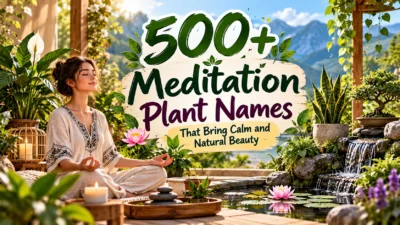

Pond plants can transform a simple backyard water feature into a beautiful, living oasis filled with colorful flowers, graceful leaves, and fascinating aquatic life. Whether you have a small garden pond, a wildlife pond, or a large outdoor water garden, the right plants make a remarkable difference. Some float across the water like natural decorations. Others grow along the edges, while submerged varieties help create a healthier aquatic environment. With so many options, choosing the perfect plants can feel overwhelming at first.
The good news is that you don’t need a professional landscaper to create a stunning pond. You can combine water lilies, lotus flowers, floating plants, marginal greenery, and oxygenating species to build a balanced aquatic garden. Your choices can reflect your personal style, available sunlight, pond depth, and maintenance preferences. You can even explore plants with unusual names, tropical appearances, or delicate blooms. This guide brings together hundreds of pond plant names to inspire your next gardening project. You’ll discover ideas for natural-looking ponds, colorful water gardens, miniature containers, and wildlife-friendly spaces. You’ll also learn how to choose suitable aquatic plants, arrange them beautifully, and avoid common planting mistakes. Whether you’re searching for pond plants for decoration, shade, water quality, or visual interest, these selections offer plenty of inspiration. Before planting, remember to check local invasive-species guidance and choose varieties suited to your climate.
Which Pond Plants Create a Beautiful and Healthy Water Garden?
The best pond plants include water lilies, lotus, marginal plants, floating species, and submerged aquatic greenery. Each group offers different colors, textures, and growing benefits.
Choose plants according to sunlight, water depth, climate, and available space. Combining several plant types creates a more attractive and balanced pond.
🌸 Pond Plants With Stunning Water Lily and Lotus Names
Water lilies and lotus flowers bring elegance to outdoor ponds with their striking blooms and distinctive foliage. These aquatic plants suit different water gardens, although lotus often needs more space than smaller water lilies.
- Hardy Water Lily
- Tropical Water Lily
- White Water Lily
- Pink Water Lily
- Yellow Water Lily
- Red Water Lily
- Blue Water Lily
- Purple Water Lily
- Colorado Water Lily
- Attraction Water Lily
- James Brydon Water Lily
- Perry’s Baby Red Water Lily
- Marliacea Chromatella Water Lily
- Arc-en-Ciel Water Lily
- Alba Water Lily
- Helvola Water Lily
- Sioux Water Lily
- Wanvisa Water Lily
- Black Princess Water Lily
- Almost Black Water Lily
- Sunny Pink Water Lily
- Joey Tomocik Water Lily
- Fabiola Water Lily
- Laydekeri Fulgens Water Lily
- Pygmy Water Lily
- Perry’s Double Yellow Water Lily
- Nymphaea Candida
- Nymphaea Odorata
- Nymphaea Rubra
- Nymphaea Mexicana
- Sacred Lotus
- American Lotus
- Momo Botan Lotus
- Baby Doll Lotus
- Green Maiden Lotus
- Perry’s Giant Sunburst Lotus
🪷 Pond Plants Inspired by Peculiar Aquatic Flowers
Peculiar aquatic flowers add unusual colors and shapes to a water garden. These names include tropical water lilies, lotus varieties, and other flowering aquatic plants worth exploring.
- Blue Star Water Lily
- King of Siam Water Lily
- Director George T. Moore Water Lily
- Tina Water Lily
- Islamorada Water Lily
- Panama Pacific Water Lily
- Wood’s Blue Goddess Water Lily
- Albert Greenberg Water Lily
- Bull’s Eye Water Lily
- Foxfire Water Lily
- Miami Rose Water Lily
- Pink Sensation Water Lily
- Green Smoke Water Lily
- Dauben Water Lily
- Mrs. George H. Pring Water Lily
- St. Louis Gold Water Lily
- Midnight Water Lily
- Lavender Lace Water Lily
- Tropic Star Water Lily
- Rhonda Kay Water Lily
- Purple Joy Water Lily
- Red Flare Water Lily
- Blue Beauty Water Lily
- Thai Beauty Water Lily
- Siam Purple Water Lily
- Queen of Siam Water Lily
- Victoria Amazonica
- Victoria Cruziana
- Nelumbo Lutea
- Nelumbo Nucifera
- Nymphaea Capensis
- Nymphaea Caerulea
- Nymphaea Gigantea
- Nymphaea Sturtevantii
- Nymphaea Micrantha
- Nymphaea Pubescens
- Nymphaea Lotus
- Nymphaea Thermarum
🌿 Pond Plants for Natural Greenery and Lush Foliage
Green aquatic foliage softens pond edges and gives water gardens a more natural appearance. These pond plants include leafy marginals, moisture-loving species, and aquatic greenery for different planting zones.
- Water Canna
- Dwarf Papyrus
- Egyptian Papyrus
- Umbrella Palm
- Water Celery
- Water Parsley
- Water Mint
- Marsh Marigold
- Pickerelweed
- Blue Flag Iris
- Yellow Flag Iris
- Japanese Iris
- Siberian Iris
- Louisiana Iris
- Sweet Flag
- Dwarf Sweet Flag
- Variegated Sweet Flag
- Water Horsetail
- Dwarf Horsetail
- Giant Horsetail
- Water Forget-Me-Not
- Brooklime
- Water Avens
- Bog Bean
- Marsh Fern
- Royal Fern
- Cinnamon Fern
- Ostrich Fern
- Marsh Pennywort
- Water Pennywort
- Creeping Jenny
- Golden Creeping Jenny
- Water Plantain
- Arrowhead Plant
- Broadleaf Arrowhead
- Water Arum
- Marsh Betony
- Water Violet
🐸 Pond Plants for Wildlife-Friendly Garden Ponds
Wildlife-friendly planting gives frogs, insects, and other small creatures places to shelter. Choose a mix of native aquatic species and plants that suit your region’s growing conditions.
- Blue Pickerel Rush
- White Pickerelweed
- Common Rush
- Soft Rush
- Hard Rush
- Corkscrew Rush
- Flowering Rush
- Water Sedge
- Fox Sedge
- Tussock Sedge
- Bottlebrush Sedge
- Lake Sedge
- Bulrush
- Softstem Bulrush
- Hardstem Bulrush
- Common Cattail
- Narrowleaf Cattail
- Broadleaf Cattail
- Sweet Flag
- Water Dock
- Great Water Dock
- Water Crowfoot
- White Water Crowfoot
- Yellow Water Crowfoot
- Marsh Speedwell
- Water Chickweed
- Water Plantain
- Common Spike-Rush
- Slender Spike-Rush
- Marsh Arrowgrass
- Water Smartweed
- Swamp Milkweed
- Blue Vervain
- Cardinal Flower
- Turtlehead
- Swamp Rose Mallow
- Blue Lobelia
- Marsh Skullcap
🪴 Pond Plants for Small Ponds and Container Water Gardens
Small ponds need plants that fit their limited space without overwhelming the water surface. Compact varieties and carefully managed aquatic greenery can create a beautiful display in tubs, bowls, and miniature water gardens.
- Pygmy Water Lily
- Helvola Water Lily
- Aurora Water Lily
- Laydekeri Lilacea Water Lily
- Perry’s Baby Red Water Lily
- Sioux Water Lily
- Froebeli Water Lily
- Colorado Water Lily
- Little Sue Water Lily
- Chrysantha Water Lily
- Dwarf Papyrus
- Dwarf Cattail
- Dwarf Sweet Flag
- Dwarf Rush
- Dwarf Bulrush
- Dwarf Pickerelweed
- Dwarf Water Canna
- Miniature Lotus
- Baby Doll Lotus
- Momo Botan Lotus
- Little Green Lotus
- Green Maiden Lotus
- Dwarf Horsetail
- Miniature Umbrella Plant
- Water Pennywort
- Floating Pennywort
- Frogbit
- Amazon Frogbit
- Salvinia Minima
- Red Root Floater
- Duckweed
- Giant Duckweed
- Azolla
- Water Lettuce
- Miniature Water Hyacinth
- Water Starwort
- Water Chickweed
- Marsh Marigold
🌼 Pond Plants With Colorful Flowers and Bright Blooms
Flowering pond plants introduce seasonal color around the water’s edge and across the surface. Combine different bloom colors and flowering periods to create a garden that changes beautifully throughout the growing season.
- Yellow Pond Lily
- White Pond Lily
- Fragrant Water Lily
- Pink Water Lily
- Red Water Lily
- Blue Water Lily
- Purple Water Lily
- Yellow Marsh Marigold
- Blue Pickerelweed
- White Pickerelweed
- Purple Water Iris
- Yellow Water Iris
- Japanese Water Iris
- Siberian Water Iris
- Louisiana Water Iris
- Water Forget-Me-Not
- Blue Water Speedwell
- Water Violet
- Flowering Rush
- Water Hawthorn
- White Water Crowfoot
- Yellow Water Crowfoot
- Water Poppy
- Water Snowflake
- Blue Lotus
- White Lotus
- Pink Lotus
- Yellow Lotus
- Red Lotus
- Swamp Rose Mallow
- Cardinal Flower
- Blue Lobelia
- Turtlehead
- Swamp Milkweed
- Bogbean
- Marsh Cinquefoil
- Water Avens
- Water Plantain
🍃 Pond Plants With Floating Leaves and Surface Cover
Floating foliage creates a softer appearance and can shade portions of the water surface. These plants vary in growth habits, so check their spread and local restrictions before adding them to your pond.
- Water Lily
- Lotus
- Frogbit
- Amazon Frogbit
- Water Lettuce
- Water Hyacinth
- Duckweed
- Giant Duckweed
- Azolla
- Salvinia Minima
- Giant Salvinia
- Red Root Floater
- Floating Fern
- Watermeal
- Floating Pennywort
- Water Clover
- Water Chestnut
- Water Shield
- Water Snowflake
- Water Poppy
- Floating Heart
- Yellow Floating Heart
- Water Caltrop
- European Frogbit
- Hydrocharis Morsus-Ranae
- Limnobium Laevigatum
- Phyllanthus Fluitans
- Salvinia Natans
- Salvinia Cucullata
- Salvinia Auriculata
- Spirodela Polyrhiza
- Lemna Minor
- Lemna Trisulca
- Wolffia Arrhiza
- Pistia Stratiotes
- Nymphoides Peltata
- Nymphoides Aquatica
- Brasenia Schreberi
💧 Pond Plants for Clearer Water and Aquatic Balance
Submerged plants absorb nutrients and provide shelter for small aquatic animals. They can support a balanced pond, but no plant guarantees clear water without suitable filtration and maintenance.
- Hornwort
- Anacharis
- Elodea Canadensis
- Egeria Densa
- Cabomba
- Fanwort
- Vallisneria
- Jungle Val
- Corkscrew Vallisneria
- Dwarf Sagittaria
- Sagittaria Subulata
- Water Starwort
- Waterweed
- Pondweed
- Curly-Leaf Pondweed
- Sago Pondweed
- Floating-Leaf Pondweed
- American Pondweed
- Water Milfoil
- Eurasian Water Milfoil
- Parrot’s Feather
- Water Buttercup
- Coontail
- Water Moss
- Willow Moss
- Java Moss
- Fontinalis Moss
- Bladderwort
- Common Bladderwort
- Greater Bladderwort
- Water Nymph
- Naiad
- Southern Naiad
- Slender Naiad
- Water Crowfoot
- Canadian Waterweed
- Water Marigold
- Nitella
🌾 Pond Plants for Edges, Banks, and Shallow Water
Marginal plants thrive in damp soil or shallow water around a pond’s perimeter. They create a natural transition between the garden and the water while adding height, texture, and seasonal interest.
- Blue Flag Iris
- Yellow Flag Iris
- Japanese Iris
- Siberian Iris
- Louisiana Iris
- Marsh Marigold
- Pickerelweed
- Water Canna
- Dwarf Papyrus
- Egyptian Papyrus
- Umbrella Palm
- Water Horsetail
- Dwarf Horsetail
- Common Rush
- Soft Rush
- Corkscrew Rush
- Flowering Rush
- Broadleaf Cattail
- Narrowleaf Cattail
- Softstem Bulrush
- Hardstem Bulrush
- Water Plantain
- Arrowhead
- Broadleaf Arrowhead
- Water Mint
- Water Celery
- Water Parsley
- Creeping Jenny
- Golden Creeping Jenny
- Marsh Pennywort
- Water Pennywort
- Water Forget-Me-Not
- Brooklime
- Bog Bean
- Marsh Fern
- Royal Fern
- Cardinal Flower
- Turtlehead
🌱 Pond Plants With Unusual Names and Interesting Shapes
Unusual aquatic plants add character to a water garden through distinctive leaves, delicate flowers, or unusual growth patterns. These choices can inspire creative pond layouts and give plant collectors something different to explore.
- Corkscrew Rush
- Parrot’s Feather
- Water Caltrop
- Water Shield
- Water Snowflake
- Water Hawthorn
- Water Soldier
- Water Wheel Plant
- Venus Flytrap
- Bladderwort
- Hornwort
- Coontail
- Water Clover
- Floating Heart
- Yellow Floating Heart
- Water Poppy
- Water Lettuce
- Water Hyacinth
- Watermeal
- Red Root Floater
- Giant Duckweed
- Water Fern
- Azolla
- Giant Salvinia
- Water Starwort
- Water Chestnut
- Frogbit
- Water Violet
- Water Avens
- Bogbean
- Marsh Cinquefoil
- Water Arum
- Skunk Cabbage
- Pickerelweed
- Arrowhead Plant
- Water Canna
- Umbrella Palm
- Dwarf Papyrus
🌴 Pond Plants for Tropical and Warm-Climate Water Gardens
Tropical aquatic plants bring bold foliage and colorful blooms to warm-climate ponds. Many need consistently warm water, so gardeners in cooler regions may need to overwinter them indoors.
- Tropical Water Lily
- Blue Star Water Lily
- King of Siam Water Lily
- Tina Water Lily
- Islamorada Water Lily
- Panama Pacific Water Lily
- Albert Greenberg Water Lily
- Wood’s Blue Goddess Water Lily
- Miami Rose Water Lily
- Bull’s Eye Water Lily
- Foxfire Water Lily
- Red Flare Water Lily
- Blue Beauty Water Lily
- Purple Joy Water Lily
- Tropic Star Water Lily
- Thai Beauty Water Lily
- Queen of Siam Water Lily
- Water Hyacinth
- Water Lettuce
- Victoria Amazonica
- Victoria Cruziana
- Tropical Lotus
- Sacred Lotus
- American Lotus
- Water Canna
- Egyptian Papyrus
- Umbrella Palm
- Dwarf Papyrus
- Water Snowflake
- Water Poppy
- Amazon Frogbit
- Red Root Floater
- Giant Salvinia
- Salvinia Minima
- Cabomba
- Egeria Densa
- Parrot’s Feather
- Water Sprite
🌳 Pond Plants for Shade, Texture, and Natural Landscaping
A thoughtful combination of pond plants creates depth and makes the surrounding landscape feel connected. Taller marginals, broad leaves, and low-growing ground cover help create a layered garden design.
- Giant Water Lily
- Hardy Water Lily
- Yellow Pond Lily
- Water Shield
- Sacred Lotus
- American Lotus
- Giant Papyrus
- Egyptian Papyrus
- Dwarf Papyrus
- Umbrella Palm
- Water Canna
- Common Cattail
- Narrowleaf Cattail
- Broadleaf Cattail
- Softstem Bulrush
- Hardstem Bulrush
- Common Rush
- Corkscrew Rush
- Water Horsetail
- Dwarf Horsetail
- Royal Fern
- Cinnamon Fern
- Ostrich Fern
- Marsh Fern
- Sweet Flag
- Variegated Sweet Flag
- Creeping Jenny
- Golden Creeping Jenny
- Water Pennywort
- Marsh Pennywort
- Water Mint
- Water Celery
- Water Parsley
- Blue Flag Iris
- Japanese Iris
- Siberian Iris
- Pickerelweed
- Arrowhead
🌺 Pond Plants for Pink, Purple, Blue, and White Flowers
Color-themed planting helps you create a coordinated pond design that matches your garden. Mix flowering water lilies with suitable marginal plants for visual interest at different heights.
- Pink Water Lily
- Red Water Lily
- White Water Lily
- Blue Water Lily
- Purple Water Lily
- Lavender Water Lily
- Yellow Water Lily
- White Lotus
- Pink Lotus
- Blue Lotus
- Yellow Lotus
- Red Lotus
- Blue Pickerelweed
- White Pickerelweed
- Purple Water Iris
- Blue Flag Iris
- Yellow Flag Iris
- Japanese Iris
- Siberian Iris
- Louisiana Iris
- Water Forget-Me-Not
- Water Violet
- Water Poppy
- Water Snowflake
- Water Hawthorn
- Marsh Marigold
- Cardinal Flower
- Blue Lobelia
- Swamp Rose Mallow
- Turtlehead
- Swamp Milkweed
- Water Avens
- Marsh Cinquefoil
- Flowering Rush
- Water Plantain
- Water Crowfoot
- White Water Crowfoot
- Yellow Water Crowfoot
🌿 Pond Plants for Beginners and Easy-Care Water Gardens
Beginner-friendly pond plants can help you build confidence while learning how aquatic gardens work. Choose manageable varieties suited to your climate, and remember that even easy-care plants need occasional thinning and maintenance.
- Hardy Water Lily
- Colorado Water Lily
- Attraction Water Lily
- Sioux Water Lily
- Helvola Water Lily
- Marsh Marigold
- Blue Flag Iris
- Siberian Iris
- Pickerelweed
- Water Mint
- Water Celery
- Water Pennywort
- Creeping Jenny
- Golden Creeping Jenny
- Sweet Flag
- Dwarf Sweet Flag
- Common Rush
- Soft Rush
- Corkscrew Rush
- Dwarf Papyrus
- Umbrella Palm
- Water Plantain
- Arrowhead
- Water Forget-Me-Not
- Frogbit
- Water Lettuce
- Hornwort
- Water Starwort
- Vallisneria
- Anacharis
- Water Hawthorn
- Water Poppy
- Water Snowflake
- Water Canna
- Dwarf Horsetail
- Marsh Pennywort
- Water Parsley
- Water Violet
How to Choose the Right Pond Plants for Your Garden
Choosing aquatic plants starts with understanding your pond’s conditions. Sunlight, water depth, climate, and available space all affect plant growth. Therefore, measure your pond before purchasing new varieties.
Water lilies usually need a suitable planting depth and enough sunlight to flower well. Marginal plants grow best around shallow edges, while submerged plants grow underwater. Floating species cover the surface and may spread quickly. Check each plant’s mature size before adding it to a small pond.
Native plants can also support local wildlife. However, some popular aquatic species become invasive outside their natural habitats. Check local regulations before purchasing them. Avoid releasing unwanted pond plants into rivers, lakes, or natural waterways.
For a balanced garden, combine several plant types rather than filling the entire pond with one variety. Leave some open water for light movement and easy maintenance. This approach creates a more natural appearance and helps prevent excessive plant growth.
How to Plant and Maintain Pond Plants Successfully
Most pond plants grow well when you match their planting method to their natural growth habits. Aquatic planting baskets work well for many water lilies and marginal plants. Use aquatic planting media instead of ordinary potting soil, which can cloud the water.
Place each plant at its recommended depth. Keep crowns and growing points positioned according to the species’ instructions. Some plants prefer shallow shelves, while others need deeper water. Follow the supplier’s guidance, especially when planting tropical varieties.
Regular maintenance keeps your water garden attractive. Remove yellowing leaves, trim excessive growth, and divide crowded plants when necessary. Floating plants may require frequent thinning during warm weather. Also, inspect submerged plants to ensure they do not overtake the pond.
Avoid adding too many plants at once. Introduce a few suitable varieties, observe their growth, and expand gradually. If your pond contains fish, select plants that suit the fish species and provide enough open swimming space. A good balance of vegetation, filtration, and water circulation supports a healthier pond.
How to Combine Pond Plants for a Natural Water Garden
A beautiful pond uses different plant heights, textures, and colors. Start with a focal point, such as a flowering water lily or lotus. Then add marginal plants around the edges to create a softer transition into the surrounding garden.
For a peaceful design, combine green foliage with white or pale pink flowers. If you prefer a brighter appearance, choose yellow irises, colorful water lilies, and flowering marginal plants. Small ponds benefit from compact varieties, while larger ponds can accommodate taller papyrus and broader foliage.
Think about seasonal changes, too. Some aquatic plants die back during winter, while others remain evergreen in suitable climates. Combining varieties with different growth patterns helps maintain interest throughout the year.
Most importantly, avoid overcrowding. Leave enough open water to appreciate reflections and allow routine cleaning. A well-planned water garden should look attractive without requiring constant pruning.
Frequently Asked Questions About Pond Plants
Which pond plants are best for beginners?
Hardy water lilies, marsh marigolds, suitable irises, and water celery can be good starting choices. Their success depends on your climate, pond depth, and available sunlight.
Start with a few manageable varieties and learn how quickly they grow. Check local invasive-species recommendations before making your final selection.
Which pond plants help keep water clear?
Submerged plants such as hornwort and suitable waterweeds absorb nutrients as they grow. This can help reduce the nutrients available to unwanted algae.
However, plants alone cannot guarantee clear water. Good filtration, appropriate fish stocking, and regular maintenance remain important.
Can pond plants grow without direct sunlight?
Some aquatic plants tolerate partial shade, although flowering varieties often need more sunlight. Water lilies generally perform best with several hours of direct sun daily.
Check each species’ light requirements before planting. In heavily shaded ponds, choose foliage plants that tolerate lower light levels.
How many plants should I put in my pond?
The ideal number depends on pond size, depth, plant variety, and whether you keep fish. Small ponds need fewer plants than large water gardens.
Avoid covering the entire surface. Leave open water for circulation, wildlife activity, and easier maintenance.
Which pond plants are best for small ponds?
Compact water lilies, dwarf papyrus, miniature rushes, and carefully managed floating plants can suit small ponds. Select varieties according to their mature size rather than their size at purchase.
Container ponds also benefit from plants that grow slowly or respond well to pruning. Check their spreading habits to prevent overcrowding.
Are floating pond plants easy to maintain?
Many floating plants are easy to grow because they do not require planting in soil. However, some reproduce rapidly in warm, nutrient-rich water.
Remove excess growth regularly and follow local restrictions. Never discard floating plants into natural waterways.
Can pond plants survive winter?
Many hardy aquatic plants survive winter when their roots or crowns remain protected at an appropriate depth. Tropical water lilies and other warm-climate species may need indoor protection.
Winter survival depends on plant hardiness, water depth, and local temperatures. Follow species-specific instructions before freezing weather arrives.
Are all aquatic plants safe for fish ponds?
No. Some plants spread aggressively, while others may be unsuitable for particular fish or pond conditions. Certain species can also create maintenance problems when they grow excessively.
Choose reputable suppliers and check local regulations. Research compatibility with your fish before introducing any new aquatic species.
Conclusion
The right pond plants can turn an ordinary water feature into a colorful, relaxing garden retreat. From elegant water lilies and lotus flowers to floating greenery and wildlife-friendly marginals, there are options for almost every pond style. Start by considering your water depth, sunlight, climate, and available space. Then combine different plant types to create a balanced and attractive display. With suitable varieties and regular care, your aquatic garden can remain beautiful throughout the growing season. Explore these pond plant names, choose your favorites, and build a water garden that reflects your personal style.

James Anderson is a passionate floral writer and lifestyle content creator with a love for nature, creativity, and meaningful moments. With a keen eye for beauty and detail, he shares insights on flowers, gifting ideas, floral trends, and special occasion inspiration. Through Florenzay, James aims to help people express emotions and create unforgettable memories through the timeless charm of flowers. 🌸