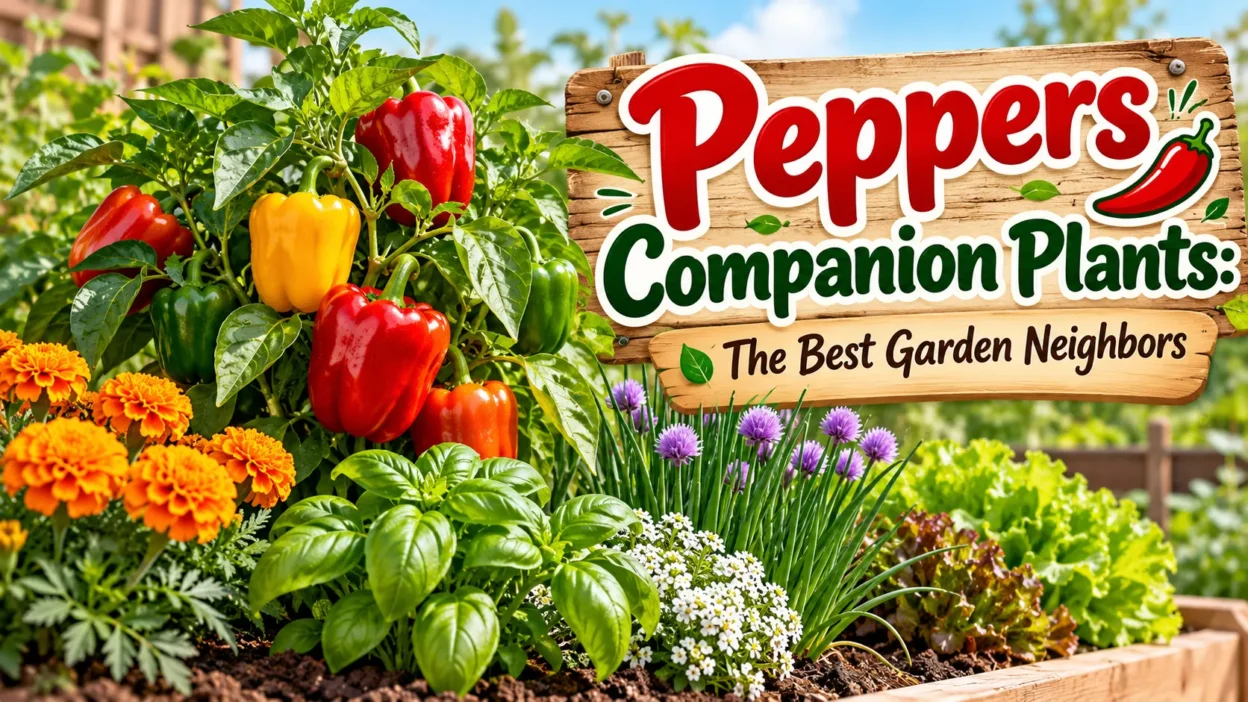
Peppers companion plants can make your vegetable garden more productive, colorful, and enjoyable to maintain. The right neighbors can attract helpful insects, support pollinators, shade the soil, and make better use of limited garden space. Whether you grow sweet bell peppers, spicy jalapeños, or fiery habaneros, choosing suitable companion plants can help create a healthier growing environment. However, not every plant makes a good neighbor. Some compete for nutrients, while others grow too aggressively or share common pests and diseases.
Fortunately, you have plenty of options when planning a pepper garden. Basil, carrots, onions, lettuce, marigolds, and several other plants can work well alongside peppers when their growing needs match. Some companions attract beneficial insects, while others provide ground cover or help you organize a productive raised bed. You can also combine herbs, flowers, and vegetables to create a garden that looks beautiful and produces fresh ingredients throughout the season. In this guide, you’ll discover useful companion planting ideas, practical plant combinations, and creative names for organizing different pepper garden layouts. You’ll also learn which plants deserve extra space and which neighbors you should avoid. With thoughtful planning, your pepper plants can enjoy suitable growing conditions without making your garden difficult to manage.
Which Companion Plants Grow Best With Peppers? 🌱
The best companions for peppers include basil, carrots, lettuce, onions, marigolds, and selected flowering herbs. These plants can help attract beneficial insects, use garden space efficiently, or provide useful ground cover. Choose companions with similar sunlight and watering needs. Keep enough space between plants for airflow, healthy roots, and easy harvesting.
1. Best Peppers Companion Plants for a Thriving Vegetable Garden 🌿
These popular companions offer practical options for a productive pepper patch. Start with a few familiar herbs and vegetables before adding more varieties to your garden.
- Sweet Basil
- Genovese Basil
- Thai Basil
- Purple Basil
- Lemon Basil
- Cinnamon Basil
- Greek Basil
- Lettuce
- Butterhead Lettuce
- Romaine Lettuce
- Looseleaf Lettuce
- Spinach
- Baby Spinach
- Swiss Chard
- Kale
- Collard Greens
- Arugula
- Carrots
- Nantes Carrots
- Chantenay Carrots
- Danvers Carrots
- Radishes
- Cherry Belle Radishes
- French Breakfast Radishes
- White Icicle Radishes
- Scallions
- Green Onions
- Bunching Onions
- Garlic
- Chives
- Parsley
- Cilantro
- Dill
- Thyme
- Oregano
2. Peppers Companion Plants That Attract Beneficial Insects 🐝
Flowering companions can attract pollinators and helpful insects to your vegetable garden. Choose several varieties with staggered bloom times to provide flowers throughout the growing season.
- Sweet Alyssum
- Calendula
- Pot Marigold
- French Marigold
- Signet Marigold
- African Marigold
- Dwarf Marigold
- Borage
- Common Yarrow
- White Yarrow
- Purple Coneflower
- Black Eyed Susan
- Purple Prairie Clover
- White Clover
- Crimson Clover
- Sweet Clover
- Buckwheat
- Phacelia
- Coriander
- Bouquet Dill
- Fernleaf Dill
- Mammoth Dill
- Fennel Flower
- Lemon Balm
- Catmint
- Anise Hyssop
- Mountain Mint
- Bee Balm
- Scarlet Bee Balm
- Lemon Mint
- Lavender
- English Lavender
- Russian Sage
- Verbena
- Zinnia
3. Vegetable Companions for a More Productive Pepper Garden 🥕
Some vegetables fit around peppers because they use different parts of the garden or mature at different times. Check mature plant sizes carefully, especially when growing larger vegetables beside compact pepper varieties.
- Bush Beans
- Provider Beans
- Blue Lake Bush Beans
- Contender Beans
- Royal Burgundy Beans
- Dragon Tongue Beans
- Pole Beans
- Kentucky Wonder Beans
- Scarlet Runner Beans
- Yardlong Beans
- Snow Peas
- Sugar Snap Peas
- Garden Peas
- Green Peas
- Edamame
- Carrots
- Parsnips
- Beets
- Detroit Dark Red Beets
- Golden Beets
- Chioggia Beets
- Turnips
- Hakurei Turnips
- Rutabagas
- Kohlrabi
- Broccoli
- Broccoli Raab
- Cauliflower
- Brussels Sprouts
- Cabbage
- Red Cabbage
- Napa Cabbage
- Bok Choy
- Tatsoi
- Mustard Greens
4. Flowering Peppers Companion Plants for a Colorful Garden 🌼
Flowers add beauty while providing nectar and pollen for visiting insects. Their benefits depend on local insect populations, flowering times, and whether you leave enough room for your peppers to receive sunlight.
- French Marigold
- African Marigold
- Signet Marigold
- Calendula
- Sweet Alyssum
- Dwarf Zinnia
- Profusion Zinnia
- Cut and Come Again Zinnia
- Cosmos
- Sulphur Cosmos
- Chocolate Cosmos
- Nasturtium
- Dwarf Nasturtium
- Trailing Nasturtium
- Jewel Mix Nasturtium
- Sunflower
- Dwarf Sunflower
- Lemon Queen Sunflower
- Mexican Sunflower
- Bachelor Buttons
- Cornflower
- Larkspur
- Snapdragon
- California Poppy
- Shirley Poppy
- Pansy
- Viola
- Sweet William
- Phlox
- Annual Phlox
- Verbena
- Moss Verbena
- Gaillardia
- Coreopsis
- Blanket Flower
5. Aromatic Herbs to Grow Near Pepper Plants 🌿
Aromatic herbs provide fresh flavor for cooking and bring variety to a mixed garden bed. Their scents do not reliably repel every pest, so combine herbs with regular plant inspections and good garden hygiene.
- Sweet Marjoram
- Wild Marjoram
- Greek Oregano
- Italian Oregano
- Common Thyme
- Lemon Thyme
- Creeping Thyme
- French Thyme
- Rosemary
- Compact Rosemary
- Sage
- Common Sage
- Purple Sage
- Pineapple Sage
- Lemon Balm
- Peppermint
- Spearmint
- Apple Mint
- Chocolate Mint
- Basil
- Lemon Basil
- Holy Basil
- Parsley
- Flat Leaf Parsley
- Curly Parsley
- Cilantro
- Vietnamese Coriander
- Chervil
- Summer Savory
- Winter Savory
- Dill
- Bouquet Dill
- Chamomile
- German Chamomile
- Roman Chamomile
6. Low-Growing Companions for Peppers in Raised Beds 🪴
Compact plants can help you use the space around pepper stems without overcrowding the bed. Keep mint in containers and leave clear access to pepper roots, stems, and lower leaves.
- Buttercrunch Lettuce
- Little Gem Lettuce
- Black Seeded Simpson Lettuce
- Red Sails Lettuce
- Tom Thumb Lettuce
- Oakleaf Lettuce
- Baby Leaf Spinach
- Bloomsdale Spinach
- New Zealand Spinach
- Mache
- Claytonia
- Garden Cress
- Watercress
- Upland Cress
- Tatsoi
- Mizuna
- Komatsuna
- Baby Bok Choy
- Dwarf Pak Choi
- French Breakfast Radish
- Cherry Belle Radish
- Easter Egg Radish
- White Icicle Radish
- Tokyo Cross Turnip
- Baby Beet
- Golden Beet
- Chioggia Beet
- Bunching Onion
- Chives
- Garlic Chives
- Creeping Thyme
- Sweet Alyssum
- Dwarf Calendula
- Compact Marigold
- Dwarf Nasturtium
7. Edible Flowers and Useful Peppers Companion Plants 🌸
Edible flowers make a pepper garden attractive and can provide extra ingredients for salads or garnishes. Confirm that a flower is edible before serving it, and never eat plants treated with products unsuitable for edible crops.
- Nasturtium
- Dwarf Nasturtium
- Calendula
- Borage
- Viola
- Sweet Violet
- Johnny Jump Up
- Pansy
- Rose Petals
- Bee Balm
- Anise Hyssop
- Lavender
- Chive Blossoms
- Garlic Chive Blossoms
- Basil Blossoms
- Cilantro Blossoms
- Dill Blossoms
- Rocket Blossoms
- Arugula Flowers
- Squash Blossoms
- Zucchini Blossoms
- Pumpkin Blossoms
- Sunflower Petals
- Cornflower
- Bachelor Buttons
- Chamomile Flowers
- Elderflowers
- Hibiscus Flowers
- Rose Mallow
- Daylily
- Safflower
- Scarlet Runner Bean Flowers
- Pea Blossoms
- Clover Blossoms
- Mustard Blossoms
8. Companion Plants for Sweet Bell Peppers 🫑
Bell peppers benefit from consistent moisture, fertile soil, warmth, and adequate spacing. Pair them with smaller crops that won’t block sunlight or compete heavily for water during hot weather.
- California Wonder Pepper
- King of the North Pepper
- California Wonder Gold Pepper
- Golden Bell Pepper
- Purple Beauty Pepper
- Sweet Chocolate Pepper
- Orange Sun Pepper
- Jimmy Nardello Pepper
- Corno di Toro Pepper
- Marconi Red Pepper
- Marconi Golden Pepper
- Carmen Pepper
- Sweet Banana Pepper
- Hungarian Wax Pepper
- Pimento Pepper
- Cherry Pepper
- Shishito Pepper
- Padrón Pepper
- Sweet Cubanelle Pepper
- Lunchbox Orange Pepper
- Lunchbox Red Pepper
- Lunchbox Yellow Pepper
- Sweet Italian Pepper
- Islander Pepper
- Doe Hill Pepper
- Lipstick Pepper
- Sheepnose Pimento
- Purple Islander Pepper
- Quadrato d’Asti Pepper
- Sweet Apple Pepper
- Mini Bell Pepper
- Orange Blaze Pepper
- Sweet Sunrise Pepper
- Sweet Sunset Pepper
9. Companion Plants for Hot Peppers and Chili Gardens 🌶️
Hot peppers generally need the same basic growing conditions as sweet peppers. These varieties can share a garden with suitable herbs, flowers, and compact vegetables, provided you meet each plant’s individual needs.
- Jalapeño Pepper
- Early Jalapeño Pepper
- Mucho Nacho Pepper
- Serrano Pepper
- Fresno Pepper
- Cayenne Pepper
- Thai Chili Pepper
- Bird’s Eye Chili
- Habanero Pepper
- Scotch Bonnet Pepper
- Ghost Pepper
- Carolina Reaper Pepper
- Trinidad Scorpion Pepper
- Fatalii Pepper
- Aji Amarillo Pepper
- Aji Limón Pepper
- Aji Charapita Pepper
- Tabasco Pepper
- Pequin Pepper
- Chiltepin Pepper
- Ancho Poblano Pepper
- Pasilla Pepper
- Guajillo Pepper
- Chilaca Pepper
- Anaheim Pepper
- New Mexico Chile Pepper
- Sandia Pepper
- Hungarian Hot Wax Pepper
- Shishito Pepper
- Padrón Pepper
- Manzano Pepper
- Rocoto Pepper
- Datil Pepper
- Cherry Bomb Pepper
- Purple Tiger Pepper
10. Plants for Natural Ground Cover Around Peppers 🌱
Ground-cover plants may help shade exposed soil and reduce moisture loss. However, they must not smother pepper stems or compete excessively for water and nutrients.
- White Clover
- Crimson Clover
- Dutch White Clover
- Strawberry Clover
- Creeping Thyme
- Woolly Thyme
- Corsican Mint
- Sweet Alyssum
- Dwarf Nasturtium
- Trailing Nasturtium
- Alpine Strawberry
- Woodland Strawberry
- Garden Strawberry
- Creeping Oregano
- Irish Moss
- Scotch Moss
- Creeping Jenny
- Ajuga
- Creeping Phlox
- Sedum
- Stonecrop
- Dwarf Chamomile
- Roman Chamomile
- Prostrate Rosemary
- Creeping Rosemary
- Dichondra
- Dwarf White Mustard
- Buckwheat
- Low-Growing Basil
- Compact Marjoram
- Baby Leaf Lettuce
- Miniature Spinach
- Mache
- Claytonia
- Dwarf Calendula
11. Container-Friendly Peppers Companion Plants 🪴
Container gardens have limited space, so choose plants with compatible water needs and modest root systems. A separate pot can be the better option for vigorous herbs or companions that need different growing conditions.
- Compact Basil
- Greek Bush Basil
- Spicy Globe Basil
- Dwarf Purple Basil
- Compact Parsley
- Curly Parsley
- Compact Chives
- Garlic Chives
- Dwarf Thyme
- Lemon Thyme
- Creeping Thyme
- Compact Oregano
- Greek Oregano
- Dwarf Marjoram
- Compact Sage
- Dwarf Rosemary
- Compact Cilantro
- Slow Bolt Cilantro
- Dwarf Dill
- Fernleaf Dill
- Baby Leaf Lettuce
- Tom Thumb Lettuce
- Little Gem Lettuce
- Red Sails Lettuce
- Compact Spinach
- Baby Spinach
- French Breakfast Radish
- Cherry Belle Radish
- Dwarf Calendula
- Signet Marigold
- Dwarf Nasturtium
- Sweet Alyssum
- Compact Viola
- Johnny Jump Up
- Miniature Zinnia
12. Seasonal Companions for a Longer Pepper Harvest 🌞
You can combine quick-growing crops with peppers to make better use of the garden throughout the season. Sow cool-season vegetables early or late, and remove them when heat or crowding affects their growth.
- Early Radishes
- French Breakfast Radishes
- Cherry Belle Radishes
- Baby Spinach
- Bloomsdale Spinach
- Butterhead Lettuce
- Romaine Lettuce
- Arugula
- Garden Cress
- Mache
- Claytonia
- Baby Bok Choy
- Tatsoi
- Mizuna
- Mustard Greens
- Bunching Onions
- Spring Onions
- Green Garlic
- Baby Carrots
- Nantes Carrots
- Baby Beets
- Golden Beets
- Turnips
- Hakurei Turnips
- Snow Peas
- Sugar Snap Peas
- Bush Beans
- Provider Beans
- French Beans
- Dwarf Calendula
- Sweet Alyssum
- Dwarf Marigold
- Buckwheat
- Cilantro
- Dill
13. More Peppers Companion Plants for a Diverse Garden 🌿
A diverse garden gives you more choices for balancing vegetables, herbs, and flowers. Treat these plants as options to evaluate rather than a guarantee of improved pepper growth, and avoid combinations that create shade or overcrowding.
- Amaranth
- Leaf Amaranth
- Swiss Chard
- Red Russian Kale
- Lacinato Kale
- Dwarf Blue Kale
- Collard Greens
- Broccoli
- Purple Sprouting Broccoli
- Cauliflower
- Romanesco
- Kohlrabi
- Turnip Greens
- Mustard Greens
- Endive
- Escarole
- Radicchio
- Chicory
- Parsnip
- Salsify
- Scorzonera
- Leeks
- Shallots
- Garlic
- Elephant Garlic
- Welsh Onion
- Chives
- Parsley
- Chervil
- Summer Savory
- Anise Hyssop
- Common Yarrow
- Cosmos
- Cornflower
- Phacelia
How to Choose the Right Peppers Companion Plants 🌱
Choosing peppers companion plants starts with understanding your garden’s growing conditions. Peppers need warm temperatures, at least six to eight hours of sunlight, fertile soil, and consistent moisture. Therefore, choose companions that tolerate similar conditions without shading the pepper plants. Basil, compact flowers, carrots, and leafy greens can work well in suitable arrangements. However, keep taller flowers and vigorous vegetables away from areas where they might block sunlight or restrict airflow. Consider the mature size of every plant before deciding where to place it.
Companion planting works best when you have a clear purpose. For example, flowering plants can attract beneficial insects, while quick-growing radishes can use open space before peppers become large. Lettuce may provide an early harvest, but it can struggle during intense summer heat. Similarly, herbs can add culinary value without requiring a separate garden bed. Remember that companion planting does not guarantee higher yields or prevent pest problems. Good watering, healthy soil, crop rotation, and regular inspections remain essential.
Which Plants Should You Avoid Growing Near Peppers? 🚫
Some plants create challenges when grown close to peppers. Large corn plants and vigorous sunflowers can cast excessive shade, while sprawling pumpkins and squash may overwhelm a small pepper bed. Potatoes, tomatoes, and eggplants belong to the nightshade family, so they can share certain pests and diseases with peppers. This doesn’t mean they can never grow nearby, but rotating crops and monitoring plant health becomes especially important. Fennel can also inhibit the growth of some neighboring plants, making it a poor choice for many mixed vegetable beds.
Spacing matters just as much as plant selection. Overcrowded gardens experience reduced airflow, making it easier for certain diseases to develop in humid conditions. Avoid placing mint directly in open garden beds because its spreading roots can quickly take over. Instead, grow it in a separate container. Also, remember that marigolds and aromatic herbs do not automatically repel every garden pest. Combine sensible companion planting with sanitation, appropriate irrigation, and targeted pest management for the best results.
How to Arrange a Pepper Companion Garden for Better Results 🧑🌾
Start by placing peppers in the sunniest part of your garden. Add basil or compact herbs nearby, then use suitable flowering plants along bed edges to attract visiting insects. Fast-growing crops, such as radishes and lettuce, can fill open spaces early in the season. As the pepper plants grow, remove crowded crops and maintain room for air circulation. In raised beds, consider grouping plants according to their watering needs. This approach makes everyday maintenance easier and reduces competition for limited soil moisture.
For containers, choose a pot large enough for the pepper’s mature root system. Avoid packing several plants into a small container simply because they appear compatible on paper. A separate herb pot beside your peppers may provide better results than planting everything together. Keep notes about harvests, pest activity, and plant growth throughout the season. Over time, these observations will help you discover which combinations work best in your local climate.
Frequently Asked Questions About Peppers Companion Plants
1. What is the best companion plant for peppers?
Basil is a popular choice because it grows well in warm conditions and provides a useful culinary harvest. Carrots, onions, lettuce, and marigolds can also fit into suitable pepper gardens. Choose companions according to available space, sunlight, and watering requirements.
2. Can I plant tomatoes and peppers together?
Yes, tomatoes and peppers can grow in the same garden when they have enough space and sunlight. However, both belong to the nightshade family and may share pests and diseases. Rotate these crops between growing areas when possible.
3. Do marigolds protect pepper plants from pests?
Marigolds can attract beneficial insects and add diversity to your garden. However, they do not reliably repel every pest or protect peppers from all diseases. Use them alongside regular inspections and appropriate pest management.
4. Can basil grow beside bell peppers?
Yes, basil is generally a suitable companion for bell peppers. Both plants enjoy warm weather, sunlight, and reasonably fertile soil. Leave enough room for mature growth, and water consistently without keeping the soil waterlogged.
5. Should I plant onions near peppers?
Onions and peppers can generally grow near each other when both receive adequate sunlight and water. Onions have relatively narrow foliage, so they may fit into spaces between larger plants. Still, avoid overcrowding and monitor soil moisture.
6. Which plants should not grow near peppers?
Avoid combinations that create excessive shade, crowd roots, or increase disease-management challenges. Large corn plants, sprawling squash, and invasive mint can cause problems in small beds. Potatoes, tomatoes, and eggplants also share some pests and diseases with peppers.
7. Can I grow companion plants with peppers in pots?
Yes, compact basil, chives, lettuce, and small flowers can work well in container gardens. Use sufficiently large pots and avoid overcrowding the roots. If two plants need different amounts of water, separate containers may be more practical.
8. Do peppers companion plants increase pepper yields?
Companion plants may improve garden diversity, attract beneficial insects, and help you use space efficiently. However, higher pepper yields are not guaranteed. Adequate sunlight, consistent watering, suitable temperatures, and good soil usually matter more than any specific plant pairing.
Conclusion 🌶️
Choosing the right peppers companion plants can help you build a productive, attractive, and manageable vegetable garden. Basil, carrots, onions, lettuce, marigolds, and selected flowering herbs offer useful starting points. However, successful companion planting requires more than placing compatible plants together. You must also consider sunlight, spacing, soil moisture, mature plant size, and shared pest risks. Start with a few combinations, observe how they perform, and adjust your garden each season. With careful planning and consistent care, you can enjoy healthier growing conditions and a rewarding harvest of fresh peppers.

James Anderson is a passionate floral writer and lifestyle content creator with a love for nature, creativity, and meaningful moments. With a keen eye for beauty and detail, he shares insights on flowers, gifting ideas, floral trends, and special occasion inspiration. Through Florenzay, James aims to help people express emotions and create unforgettable memories through the timeless charm of flowers. 🌸