
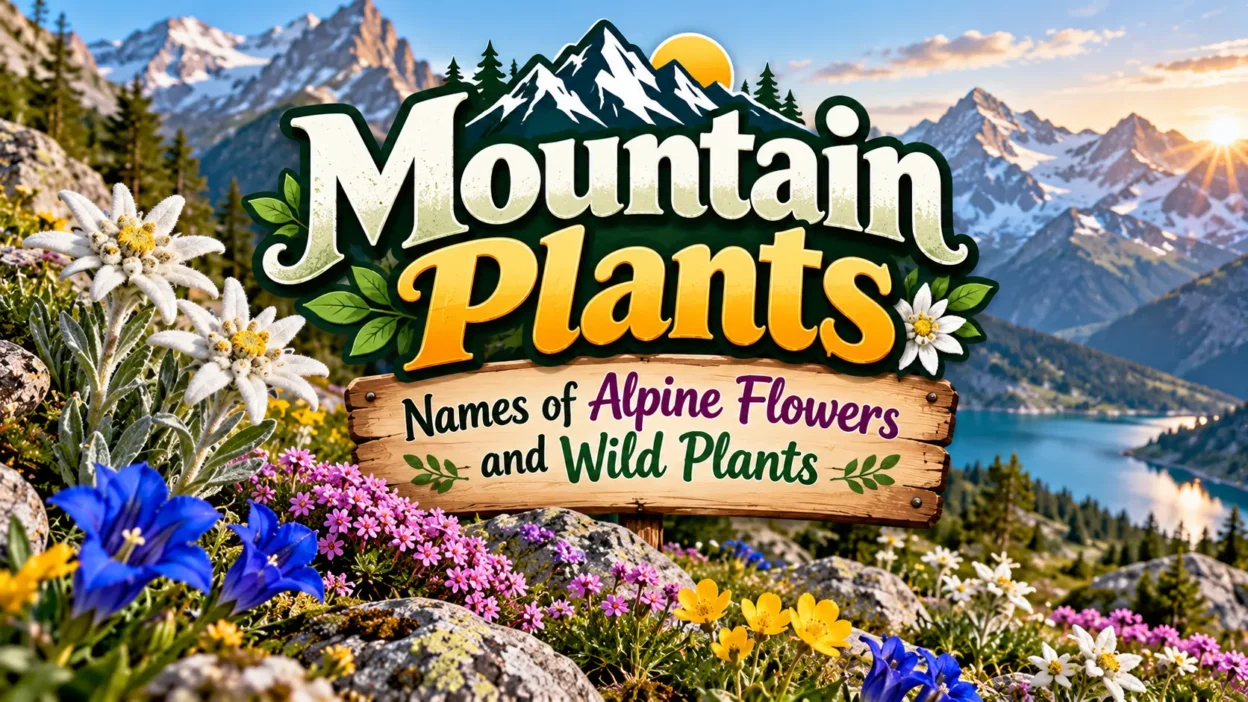
Mountain plants bring a special kind of beauty to the world’s highest peaks, rocky slopes, and peaceful valleys. From colorful alpine flowers to hardy evergreen shrubs, these remarkable plants thrive where ordinary garden plants often struggle. If you love nature, plan a mountain garden, or simply enjoy discovering beautiful plant names, this collection offers plenty of inspiration. You will discover familiar wildflowers, unusual alpine species, native mountain greenery, and creative names inspired by rugged landscapes. Each group makes it easier to find plants that match your interests.
Some mountain plants grow close to the ground to escape strong winds. Others develop deep roots that help them survive rocky soil and changing temperatures. Meanwhile, delicate flowers add surprising color to cold, high-altitude environments. Popular examples include edelweiss, alpine aster, mountain avens, and moss campion. Their names often reflect their appearance, habitat, or ability to survive challenging conditions. Learning these names can also help gardeners choose suitable plants for rock gardens, slopes, and cooler outdoor spaces. However, growing conditions vary by species, elevation, and region, so it is important to check each plant’s needs before planting. This guide organizes mountain plant names into useful categories, including alpine flowers, evergreen plants, medicinal species, ground covers, and native wildflowers.
Which Mountain Plants Are Best Known for Their Beauty and Hardiness?
Mountain plants are species that grow in mountainous environments, including alpine meadows, rocky slopes, and high-altitude forests. Many tolerate cold temperatures, strong winds, thin soils, and short growing seasons.
Famous examples include edelweiss, alpine aster, mountain avens, gentian, and moss campion. Some grow as colorful wildflowers, while others form evergreen shrubs, grasses, or protective ground covers.
The best choice depends on your local climate, soil, sunlight, and intended use. Always check a plant’s growing requirements before adding it to your garden.
Beautiful Mountain Plants Names for Alpine Gardens
Alpine gardens capture the charm of high mountain landscapes in a small space. These plants offer delicate flowers, compact growth, and impressive resilience. 🌿
- Edelweiss
- Alpine Aster
- Mountain Avens
- Moss Campion
- Alpine Forget-Me-Not
- Snow Gentian
- Alpine Poppy
- Alpine Phlox
- Rock Jasmine
- Alpine Saxifrage
- Mountain Sandwort
- Alpine Catchfly
- Alpine Speedwell
- Alpine Bellflower
- Dwarf Alpine Campion
- Alpine Primrose
- Alpine Buttercup
- Alpine Cinquefoil
- Alpine Rockcress
- Alpine Willowherb
- Alpine Bistort
- Alpine Milkwort
- Alpine Chickweed
- Alpine Draba
- Alpine Hawkweed
- Alpine Fleabane
- Alpine Butterwort
- Alpine Pennycress
- Alpine Toadflax
- Alpine Groundsel
- Alpine Arnica
- Alpine Knapweed
- Alpine Bluebell
- Alpine Clover
- Alpine Thistle
- Alpine Stonecrop
- Alpine Speedwell
- Alpine Snowbell
- Alpine Ragwort
- Alpine Bellflower
Colorful Mountain Wildflowers Names for Nature Lovers
Mountain wildflowers brighten meadows, forest edges, and rocky trails during the growing season. Their colors range from brilliant yellow to deep purple and soft pink. 🌸
- Mountain Bluebell
- Mountain Columbine
- Mountain Lupine
- Mountain Paintbrush
- Mountain Indian Paintbrush
- Mountain Larkspur
- Mountain Goldenrod
- Mountain Fireweed
- Mountain Harebell
- Mountain Phlox
- Mountain Buttercup
- Mountain Marigold
- Mountain Daisy
- Mountain Aster
- Mountain Primrose
- Mountain Poppy
- Mountain Gentian
- Mountain Violet
- Mountain Avens
- Mountain Cinquefoil
- Mountain Clover
- Mountain Arnica
- Mountain Fleabane
- Mountain Sunflower
- Mountain Jacob’s Ladder
- Mountain Forget-Me-Not
- Mountain Shooting Star
- Mountain Penstemon
- Mountain Valerian
- Mountain Sweetpea
- Mountain Yarrow
- Mountain Ragwort
- Mountain Anemone
- Mountain Orchid
- Mountain Saxifrage
- Mountain Bedstraw
- Mountain Campion
- Mountain Evening Primrose
- Mountain Helleborine
- Mountain Fritillary
Rare and Unusual Mountain Plants Names to Discover
Some mountain plants look unusual because they have adapted to exposed rocks, nutrient-poor soils, or short summers. Their distinctive shapes make them fascinating subjects for nature enthusiasts. 🏔️
- Snow Lotus
- Himalayan Blue Poppy
- Ghost Orchid
- King’s Crown
- Glacier Buttercup
- Arctic Poppy
- Snowdon Lily
- Purple Saxifrage
- Dwarf Willow
- Alpine Bearberry
- Himalayan Edelweiss
- Cushion Pink
- Alpine Azalea
- Rockfoil
- Glacier Crowfoot
- Snow-in-Summer
- Mountain Sorrel
- Alpine Heliotrope
- Dwarf Rhododendron
- Alpine Lady’s Mantle
- Mountain Avens
- Alpine Houseleek
- Woolly Lousewort
- Himalayan Poppy
- Alpine Butterwort
- Arctic Willow
- Snow Gentian
- Rock Speedwell
- Alpine Bittercress
- Mountain Whitlowgrass
- Cushion Draba
- Alpine Parnassia
- Mountain Wormwood
- Glacier Lily
- Alpine Fleabane
- Dwarf Primrose
- Alpine Pasqueflower
- Mountain Jacob’s Ladder
- Snowbell
- Alpine Mouse-ear
Evergreen Mountain Plants Names for Year-Round Greenery
Evergreen mountain plants keep their foliage throughout much of the year. Many conifers and hardy shrubs provide shelter, structure, and greenery in cold or exposed landscapes. 🌲
- Mountain Pine
- Dwarf Mountain Pine
- Swiss Stone Pine
- Siberian Fir
- Subalpine Fir
- Alpine Juniper
- Mountain Hemlock
- Mountain Spruce
- Blue Spruce
- Norway Spruce
- Whitebark Pine
- Bristlecone Pine
- Rocky Mountain Juniper
- Creeping Juniper
- Mountain Yew
- Alpine Bearberry
- Mountain Boxwood
- Dwarf Rhododendron
- Alpine Azalea
- Mountain Laurel
- Kinnikinnick
- Wintergreen
- Mountain Mahonia
- Evergreen Huckleberry
- Alpine Heather
- Mountain Heather
- Crowberry
- Bog Rosemary
- Dwarf Birch
- Alpine Willow
- Mountain Cranberry
- Bearberry Cotoneaster
- Alpine Snowberry
- Mountain Holly
- Dwarf Hemlock
- Alpine Honeysuckle
- Mountain Camellia
- Alpine Heath
- Mountain Grevillea
- Prostrate Juniper
Mountain Plants Names for Rock Gardens and Rocky Slopes
Rock gardens recreate the conditions found on mountain slopes, where drainage is fast and soil may be shallow. Compact plants can soften stones while adding color and texture. 🪨
- Rock Cress
- Rock Jasmine
- Rock Soapwort
- Rock Phlox
- Rock Speedwell
- Rock Rose
- Rockfoil Saxifrage
- Rock Pink
- Rock Thyme
- Rock Pennycress
- Rock Lettuce
- Rock Campion
- Rock Cinquefoil
- Rock Willow
- Rock Fern
- Rock Stonecrop
- Rock Spikemoss
- Rock Sandwort
- Rock Chickweed
- Rock Goldenrod
- Alpine Stonecrop
- Moss Campion
- Creeping Phlox
- Woolly Thyme
- Blue Fescue
- Irish Moss
- Scotch Moss
- Hens and Chicks
- Sempervivum
- Hardy Ice Plant
- Alpine Dianthus
- Dwarf Iris
- Creeping Juniper
- Snow-in-Summer
- Pasque Flower
- Alpine Aster
- Cushion Pink
- Dwarf Campanula
- Alpine Forget-Me-Not
- Alpine Saxifrage
Medicinal Mountain Plants Names with Traditional Uses
Several mountain plants have a long history in traditional herbal practices. Their uses vary across cultures, and some species require careful identification because similar-looking plants can have very different properties. 🌱
- Mountain Arnica
- Alpine Arnica
- Mountain Valerian
- Alpine Valerian
- Mountain Yarrow
- Alpine Yarrow
- Mountain Mint
- Wild Thyme
- Mountain Thyme
- Alpine Wormwood
- Mountain Wormwood
- Alpine Gentian
- Yellow Gentian
- Mountain Sage
- Alpine Sage
- Mountain Angelica
- Alpine Angelica
- Mountain Chamomile
- Wild Chamomile
- Alpine Plantain
- Mountain Plantain
- Alpine Rhodiola
- Golden Root
- Mountain Horehound
- Alpine Horehound
- Mountain Lemon Balm
- Alpine Lady’s Mantle
- Mountain Meadowsweet
- Alpine Meadowsweet
- Mountain St John’s Wort
- Alpine St John’s Wort
- Mountain Mugwort
- Alpine Mugwort
- Mountain Self-Heal
- Alpine Self-Heal
- Mountain Juniper
- Alpine Juniper
- Mountain Eyebright
- Alpine Eyebright
- Mountain Sorrel
Mountain Plants Names for Ground Cover and Living Carpets
Ground-cover plants spread across the soil and help create a natural-looking mountain garden. Choose species suited to your climate, since not every alpine plant tolerates the heat or humidity of lowland gardens. 🌿
- Moss Campion
- Creeping Phlox
- Alpine Thyme
- Woolly Thyme
- Alpine Bearberry
- Mountain Bearberry
- Creeping Juniper
- Alpine Stonecrop
- Goldmoss Stonecrop
- White Stonecrop
- Two-Row Stonecrop
- Hens and Chicks
- Cobweb Houseleek
- Alpine Saxifrage
- Purple Saxifrage
- Mossy Saxifrage
- Alpine Sandwort
- Mountain Sandwort
- Irish Moss
- Scotch Moss
- Blue Star Creeper
- Creeping Mazus
- Alpine Speedwell
- Creeping Veronica
- Dwarf Mondo Grass
- Alpine Pennycress
- Mountain Whitlowgrass
- Dwarf Willow
- Alpine Willow
- Creeping Potentilla
- Alpine Cinquefoil
- Dwarf Campanula
- Alpine Bellflower
- Snow-in-Summer
- Alpine Catchfly
- Mountain Chickweed
- Alpine Chickweed
- Rock Cress
- Alpine Rockcress
- Cushion Pink
Mountain Plants Names Inspired by Snow and Ice
Snow-covered peaks create some of the most memorable mountain habitats. Plants in these environments often stay low, flower quickly, or tolerate sudden changes in temperature. ❄️
- Snow Lotus
- Snow Gentian
- Snowdon Lily
- Glacier Lily
- Snow Buttercup
- Snow Poppy
- Snow Saxifrage
- Snow Campion
- Snowbell
- Snow Willow
- Snow Heather
- Snow Avens
- Snow Anemone
- Snow Daisy
- Snow Violet
- Snow Primrose
- Snow Forget-Me-Not
- Snow Phlox
- Snow Gentianella
- Glacier Buttercup
- Glacier Crowfoot
- Glacier Poppy
- Glacier Saxifrage
- Glacier Lily
- Glacier Avens
- Glacier Moss
- Glacier Cress
- Ice Plant
- Hardy Ice Plant
- Arctic Poppy
- Arctic Willow
- Arctic Saxifrage
- Arctic Chickweed
- Arctic Bellflower
- Arctic Mouse-ear
- Arctic Buttercup
- Arctic Avens
- Arctic Heather
- Alpine Snowbell
- Alpine Poppy
Mountain Plants Names for Forests and Shaded Valleys
Mountain forests support a different range of plants from exposed alpine ridges. Ferns, woodland flowers, mosses, and shade-loving shrubs flourish beneath trees and beside cool streams. 🌳
- Mountain Fern
- Alpine Lady Fern
- Oak Fern
- Bracken Fern
- Deer Fern
- Maidenhair Fern
- Alpine Wood Fern
- Mountain Wood Fern
- Mountain Maple
- Mountain Ash
- Mountain Alder
- Mountain Birch
- Paper Birch
- Dwarf Birch
- Mountain Willow
- Mountain Dogwood
- Mountain Elderberry
- Red Huckleberry
- Mountain Blueberry
- Woodland Strawberry
- Wild Ginger
- Bunchberry
- Twinflower
- False Solomon’s Seal
- Wild Lily of the Valley
- Foamflower
- Wood Anemone
- Alpine Enchanter’s Nightshade
- Mountain Sweet Cicely
- Mountain Valerian
- Woodland Violet
- Mountain Sorrel
- Alpine Wintergreen
- Mountain Wintergreen
- Wood Horsetail
- Mountain Clubmoss
- Alpine Clubmoss
- Fir Clubmoss
- Mountain Moss
- Reindeer Lichen
Mountain Plants Names for Grasses, Sedges, and Alpine Meadows
Grasses and sedges provide texture and stability in mountain meadows. Their narrow leaves and compact growth help many species cope with cold weather and exposed terrain. 🌾
- Alpine Bluegrass
- Alpine Fescue
- Mountain Fescue
- Blue Fescue
- Sheep Fescue
- Tufted Hairgrass
- Alpine Hairgrass
- Arctic Hairgrass
- Alpine Bentgrass
- Mountain Bentgrass
- Alpine Meadow Grass
- Mountain Meadow Grass
- Alpine Reedgrass
- Mountain Reedgrass
- Alpine Timothy
- Mountain Timothy
- Alpine Oatgrass
- Mountain Oatgrass
- Alpine Wheatgrass
- Mountain Wheatgrass
- Alpine Foxtail
- Mountain Foxtail
- Alpine Ryegrass
- Mountain Ryegrass
- Alpine Sedge
- Mountain Sedge
- Arctic Sedge
- Alpine Cotton Grass
- Mountain Cotton Grass
- Hare’s-Tail Cottongrass
- Alpine Rush
- Mountain Rush
- Alpine Woodrush
- Mountain Woodrush
- Alpine Spike-Rush
- Mountain Spike-Rush
- Alpine Moor Grass
- Mountain Moor Grass
- Alpine Matgrass
- Mountain Matgrass
Mountain Plants Names for Shrubs and Flowering Bushes
Mountain shrubs bring height, structure, and seasonal color to natural landscapes. Many grow slowly, making them useful choices for gardens that need a rugged, long-lasting appearance. 🌺
- Mountain Laurel
- Alpine Rhododendron
- Dwarf Rhododendron
- Mountain Azalea
- Alpine Azalea
- Mountain Heather
- Alpine Heather
- Mountain Heath
- Alpine Heath
- Mountain Manzanita
- Alpine Bearberry
- Mountain Blueberry
- Alpine Huckleberry
- Mountain Cranberry
- Alpine Cranberry
- Mountain Snowberry
- Alpine Snowberry
- Mountain Currant
- Alpine Currant
- Mountain Gooseberry
- Alpine Gooseberry
- Mountain Honeysuckle
- Alpine Honeysuckle
- Mountain Spiraea
- Alpine Spiraea
- Mountain Willow
- Alpine Willow
- Mountain Birch
- Alpine Birch
- Mountain Alder
- Alpine Alder
- Mountain Serviceberry
- Alpine Serviceberry
- Mountain Mahonia
- Alpine Mahonia
- Mountain Cotoneaster
- Alpine Cotoneaster
- Mountain Rose
- Alpine Rose
- Mountain Shrubby Cinquefoil
Mountain Plants Names for Native and Regional Landscapes
Native mountain plants have adapted to the climates, soils, and wildlife of particular regions. Choosing locally native species can support biodiversity while helping your garden feel connected to its natural surroundings. 🌎
- Rocky Mountain Columbine
- Rocky Mountain Penstemon
- Rocky Mountain Bee Plant
- Rocky Mountain Iris
- Rocky Mountain Juniper
- Rocky Mountain Maple
- Rocky Mountain Douglas-Fir
- Rocky Mountain Bristlecone Pine
- Rocky Mountain Pussytoes
- Rocky Mountain Aster
- Rocky Mountain Goldenrod
- Rocky Mountain Fescue
- Rocky Mountain Bluebell
- Rocky Mountain Ragwort
- Rocky Mountain Lupine
- Rocky Mountain Yarrow
- Rocky Mountain Sedge
- Sierra Columbine
- Sierra Nevada Primrose
- Sierra Nevada Lewisia
- Sierra Gooseberry
- Sierra Willow
- Cascade Lily
- Cascade Penstemon
- Cascade Mountain Ash
- Cascade Azalea
- Appalachian Mountain Laurel
- Appalachian Bluet
- Appalachian Balsam
- Appalachian Aster
- Himalayan Blue Poppy
- Himalayan Birch
- Himalayan Blue Pine
- Himalayan Edelweiss
- Himalayan Primrose
- Himalayan Rhubarb
- Himalayan Poppy
- Japanese Alpine Cherry
- Swiss Stone Pine
- European Alpine Pasqueflower
Mountain Plants Names for Fragrant Flowers and Aromatic Herbs
Fragrant mountain plants can bring extra sensory appeal to gardens and outdoor spaces. Some release their scent when their leaves warm in sunlight, while others produce aromatic flowers during their brief blooming season. 🌼
- Mountain Thyme
- Alpine Thyme
- Wild Mountain Mint
- Alpine Mint
- Mountain Sage
- Alpine Sage
- Mountain Lavender
- Alpine Lavender
- Mountain Oregano
- Wild Oregano
- Mountain Marjoram
- Alpine Marjoram
- Mountain Rosemary
- Wild Rosemary
- Mountain Chamomile
- Alpine Chamomile
- Mountain Lemon Balm
- Alpine Lemon Balm
- Mountain Anise Hyssop
- Alpine Hyssop
- Mountain Basil
- Wild Basil
- Mountain Savory
- Alpine Savory
- Mountain Tarragon
- Alpine Tarragon
- Mountain Wormwood
- Alpine Wormwood
- Mountain Catmint
- Alpine Catmint
- Mountain Sweet Cicely
- Alpine Sweet Cicely
- Mountain Angelica
- Alpine Angelica
- Mountain Valerian
- Alpine Valerian
- Mountain Yarrow
- Alpine Yarrow
- Mountain Meadowsweet
- Alpine Meadowsweet
Mountain Plants Names for Edible Berries and Wild Fruits
Some mountain shrubs produce berries and fruits that feed birds, mammals, and other wildlife. However, wild fruits can resemble poisonous species, so never eat a plant without reliable identification and regional safety guidance. 🍓
- Mountain Blueberry
- Alpine Blueberry
- Mountain Huckleberry
- Alpine Huckleberry
- Mountain Cranberry
- Alpine Cranberry
- Mountain Bilberry
- Alpine Bilberry
- Mountain Bearberry
- Alpine Bearberry
- Mountain Strawberry
- Alpine Strawberry
- Wild Alpine Raspberry
- Mountain Raspberry
- Alpine Blackberry
- Mountain Blackberry
- Mountain Gooseberry
- Alpine Gooseberry
- Mountain Currant
- Alpine Currant
- Mountain Serviceberry
- Alpine Serviceberry
- Mountain Cloudberry
- Alpine Cloudberry
- Mountain Lingonberry
- Alpine Lingonberry
- Mountain Chokecherry
- Alpine Chokecherry
- Mountain Elderberry
- Alpine Elderberry
- Mountain Juniper Berry
- Alpine Juniper Berry
- Mountain Mulberry
- Wild Mountain Cherry
- Mountain Rose Hip
- Alpine Rose Hip
- Mountain Hawthorn
- Alpine Hawthorn
- Mountain Rowan
- Alpine Rowan
Mountain Plants Names for Ferns, Mosses, and Lichens
Not every mountain plant produces a showy flower. Ferns, mosses, and lichens create rich textures on forest floors, damp rocks, and shaded slopes. Some lichens are partnerships between fungi and photosynthetic organisms rather than plants in the strict botanical sense. 🌱
- Alpine Lady Fern
- Mountain Wood Fern
- Alpine Wood Fern
- Mountain Male Fern
- Alpine Male Fern
- Mountain Polypody
- Alpine Polypody
- Mountain Bracken
- Alpine Bracken
- Mountain Clubmoss
- Alpine Clubmoss
- Fir Clubmoss
- Alpine Spikemoss
- Mountain Spikemoss
- Alpine Haircap Moss
- Mountain Haircap Moss
- Cushion Moss
- Rock Cap Moss
- Granite Moss
- Alpine Bryum
- Mountain Bryum
- Feather Moss
- Mountain Feather Moss
- Alpine Feather Moss
- Reindeer Lichen
- Alpine Reindeer Lichen
- Mountain Reindeer Lichen
- Rock Tripe
- Alpine Rock Lichen
- Mountain Shield Lichen
- Map Lichen
- Alpine Map Lichen
- Mountain Pelt Lichen
- Alpine Pelt Lichen
- Iceland Moss
- Mountain Iceland Moss
- Alpine Cup Lichen
- Mountain Cup Lichen
- Snow Lichen
- Alpine Snow Lichen
How to Choose the Right Mountain Plants for Your Garden
Choosing mountain plants starts with understanding your garden’s natural conditions. Alpine species often prefer excellent drainage, plenty of sunlight, and soil that does not remain waterlogged. However, woodland mountain plants may need shade and consistently moist soil. 🌿
Before buying plants, compare your local winter temperatures with each species’ hardiness range. Consider summer heat, rainfall, wind exposure, and the amount of direct sunlight your garden receives. Raised beds and rock gardens can help recreate mountain conditions, especially when heavy soil holds too much water. Native plants adapted to your region may also require less maintenance once established. Avoid collecting wild plants from mountain habitats, as removal can damage fragile ecosystems. Instead, purchase nursery-propagated plants from reputable growers.
Why Mountain Plants Matter for Biodiversity and the Environment
Mountain vegetation supports wildlife and protects landscapes in several important ways. Flowering plants provide nectar and pollen, while shrubs and grasses offer food and shelter for birds, insects, and small mammals. 🌎
Plant roots can help stabilize slopes and reduce soil erosion. Ground covers also protect exposed soil from heavy rain and temperature changes. In alpine environments, mosses and lichens contribute to habitats where growing conditions remain challenging. However, mountain ecosystems can be sensitive to climate change, invasive species, and human disturbance. Gardeners can help by choosing suitable native plants, avoiding invasive species, and respecting protected habitats. Even a small garden can provide useful shelter and seasonal resources for local wildlife.
How to Identify Mountain Plants by Their Leaves and Flowers
Identifying mountain plants becomes easier when you observe several features together. Start with the flower’s color and shape, then examine leaf arrangement, stem structure, and overall plant height. 🔎
Next, note where the plant grows. A low cushion-shaped flower on a rocky ridge may belong to a different group than a tall flowering plant beside a mountain stream. Elevation, flowering season, and regional distribution also help narrow down possible matches. Use a regional field guide or a trusted botanical database to compare your observations. Photograph the entire plant alongside close-ups of its leaves and flowers. Never rely on color alone, and avoid touching unfamiliar plants when identification remains uncertain.
Frequently Asked Questions About Mountain Plants
What is the most famous mountain plant?
Edelweiss is among the world’s most recognizable mountain flowers. Its pale, woolly-looking petals and association with the Alps make it especially popular in gardens, folklore, and nature photography.
Other well-known examples include gentians, alpine asters, mountain avens, and Himalayan blue poppies. The most famous species can vary depending on the mountain range and region.
Which plants grow naturally on high mountains?
High mountains support hardy flowers, grasses, dwarf shrubs, mosses, and lichens. Examples include moss campion, alpine saxifrage, edelweiss, alpine poppies, and dwarf willows.
The species depend on elevation, climate, and geography. Plants growing near the tree line often differ from those found on exposed alpine ridges.
Are mountain plants suitable for home gardens?
Yes, many mountain plants grow successfully in home gardens when their environmental needs match local conditions. Rock gardens, raised beds, and containers can provide suitable drainage for compact alpine species.
However, some plants struggle in hot, humid climates or heavy soils. Check hardiness, sunlight, moisture, and drainage requirements before purchasing them.
What are the best mountain plants for rock gardens?
Moss campion, alpine saxifrage, creeping phlox, alpine thyme, and hens and chicks are popular choices for rock gardens. Many offer compact growth and attractive foliage or flowers.
Choose plants according to your climate and available sunlight. Also, leave enough space for mature growth and avoid combining species with very different watering requirements.
Do mountain plants survive in cold weather?
Many mountain plants tolerate cold weather because they have evolved in environments with harsh winters. Some grow close to the ground, while others survive through protected roots, dormant buds, or specialized leaves.
However, cold tolerance varies considerably. A plant adapted to snowy alpine conditions may still struggle with winter waterlogging or hot summer temperatures.
Which mountain plants produce colorful flowers?
Mountain columbine, alpine aster, gentian, alpine poppy, and Himalayan blue poppy offer striking flowers. Their colors include blue, purple, yellow, pink, and white.
Flowering times differ by species and elevation. Research each plant’s growing season to create a garden with color throughout the warmer months.
Are all mountain plants edible or medicinal?
No, mountain plants are not automatically safe to eat or use as herbal remedies. Some species are toxic, and others can cause irritation or interact with medications.
Never consume a wild plant based only on its common name or appearance. Consult a qualified expert and reliable regional identification resources before considering any medicinal or edible use.
How can I find the scientific name of a mountain plant?
Start by recording the plant’s flower shape, leaf arrangement, size, habitat, and location. Then compare these details with a regional field guide or a reputable botanical database.
Scientific names help distinguish species that share similar common names. A clear photograph and information about elevation and flowering season can make identification more reliable.
Conclusion
Mountain plants reveal how beautifully nature adapts to challenging environments. From elegant edelweiss and colorful alpine poppies to evergreen mountain shrubs, grasses, and delicate mosses, these plants offer endless inspiration for nature lovers and gardeners. This collection of mountain plants names can help you explore unfamiliar species, plan a rock garden, or discover new ideas for botanical content. Remember to check each plant’s growing requirements before planting it. Choose regionally appropriate species, protect natural habitats, and identify wild plants carefully. With the right knowledge, you can appreciate mountain vegetation while supporting biodiversity and creating a garden inspired by the mountains.

James Anderson is a passionate floral writer and lifestyle content creator with a love for nature, creativity, and meaningful moments. With a keen eye for beauty and detail, he shares insights on flowers, gifting ideas, floral trends, and special occasion inspiration. Through Florenzay, James aims to help people express emotions and create unforgettable memories through the timeless charm of flowers. 🌸