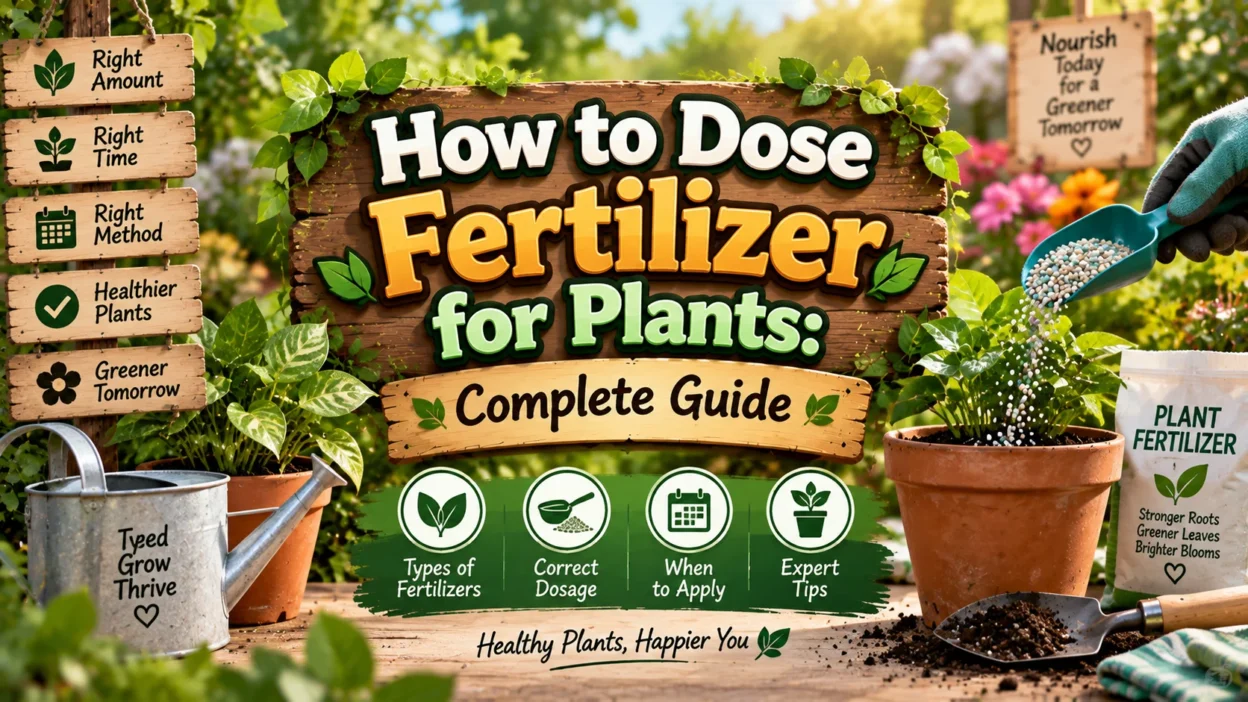
How to dose fertilizer for plants is easier when you understand concentration, plant needs, and application timing. Too little fertilizer may slow growth and reduce flowering. Too much can damage roots, burn leaves, and create nutrient problems. The right dose depends on the fertilizer type, plant species, container size, soil condition, and growth stage. Therefore, one universal measurement does not work for every garden. Liquid feeds, water-soluble powders, granular products, and slow-release fertilizers all require different approaches. Reading the product label should always be your starting point. The label gives the manufacturer’s recommended concentration and application frequency. You can then adjust your routine based on how your plants respond.
A good fertilizer routine should support healthy growth without forcing excessive growth. Young seedlings often need gentler feeding than mature plants. Houseplants may need less fertilizer than fast-growing vegetables planted outdoors. Flowering plants can also have different nutrient needs from leafy greens or herbs. In addition, potting soil can already contain nutrients, which changes how much extra fertilizer a plant needs. Water quality can also influence nutrient availability. By learning how to calculate fertilizer concentration, measure diluted feeds, and recognize signs of overfeeding, you can create a safer feeding schedule. This guide explains practical dosing methods for common plants and growing situations. It also covers NPK numbers, liquid fertilizer dilution, granular application, slow-release products, seasonal feeding, and common mistakes.
How to Dose Fertilizer for Plants Safely and Correctly
Start with the fertilizer label and identify the recommended amount per gallon, liter, pot, or square foot.
Measure the fertilizer accurately instead of estimating by eye.
Dilute concentrated products with the correct amount of water before application.
Apply fertilizer to healthy plants and avoid feeding severely stressed or dry plants.
Houseplant Names
Houseplants usually grow in limited soil, so fertilizer concentration matters. These popular indoor plants can benefit from a carefully measured feeding routine.
- Snake Plant
- Spider Plant
- Pothos
- Golden Pothos
- Heartleaf Philodendron
- Monstera
- ZZ Plant
- Peace Lily
- Rubber Plant
- Fiddle Leaf Fig
- Chinese Evergreen
- Cast Iron Plant
- Prayer Plant
- Calathea
- Peperomia
- Dieffenbachia
- Dracaena
- Schefflera
- Parlor Palm
- Areca Palm
- Boston Fern
- Bird’s Nest Fern
- Maidenhair Fern
- English Ivy
- String of Pearls
- String of Hearts
- African Violet
- Begonia
- Anthurium
- Orchid
- Christmas Cactus
- Jade Plant
- Aloe Vera
- Haworthia
- Echeveria
- Crown of Thorns
- Fittonia
- Polka Dot Plant
- Wandering Dude
- Arrowhead Plant
- Nerve Plant
- Croton
- Lucky Bamboo
- Bromeliad
Vegetable Names
Vegetables can have changing nutrient needs as they move from seedlings to flowering and fruit production. Proper fertilizer dosing helps provide nutrients without encouraging excessive leafy growth.
- Tomato
- Pepper
- Cucumber
- Zucchini
- Pumpkin
- Eggplant
- Broccoli
- Cauliflower
- Cabbage
- Kale
- Spinach
- Lettuce
- Swiss Chard
- Carrot
- Radish
- Beet
- Turnip
- Potato
- Sweet Potato
- Green Bean
- Pea
- Corn
- Okra
- Onion
- Garlic
- Leek
- Celery
- Asparagus
- Brussels Sprouts
- Collard Greens
- Mustard Greens
- Arugula
- Bok Choy
- Kohlrabi
- Parsnip
- Rutabaga
- Artichoke
- Endive
- Fennel
- Watercress
- Scallion
- Shallot
- Cress
- Amaranth
Herb Names
Herbs generally prefer balanced nutrition rather than aggressive feeding. Their fertilizer requirements also depend on whether they grow in containers, garden beds, or hydroponic systems.
- Basil
- Mint
- Rosemary
- Thyme
- Oregano
- Parsley
- Cilantro
- Sage
- Chives
- Dill
- Tarragon
- Marjoram
- Lemongrass
- Lavender
- Fennel
- Sorrel
- Stevia
- Catnip
- Chamomile
- Anise
- Caraway
- Cumin
- Borage
- Chervil
- Lovage
- Lemon Balm
- Savoury
- Bay Laurel
- Culantro
- Epazote
- Hyssop
- Feverfew
- Wintergreen
- Bee Balm
- Yarrow
- Nasturtium
- Calendula
- Mugwort
- Rue
- Watercress
- Sorrel
- Shiso
- Perilla
- Vietnamese Coriander
Flower Names
Flowering plants often need balanced nutrition during active growth. Fertilizer dosing should change when plants enter flowering because excessive nitrogen may produce leaves instead of blooms.
- Rose
- Dahlia
- Marigold
- Petunia
- Zinnia
- Cosmos
- Sunflower
- Geranium
- Begonia
- Impatiens
- Snapdragon
- Aster
- Daisy
- Chrysanthemum
- Carnation
- Pansy
- Viola
- Primrose
- Lantana
- Verbena
- Salvia
- Coneflower
- Black Eyed Susan
- Foxglove
- Delphinium
- Hollyhock
- Zinnia
- Calendula
- Nasturtium
- Morning Glory
- Sweet Pea
- Cosmos
- Cleome
- Coreopsis
- Dianthus
- Phlox
- Columbine
- Lupine
- Gaillardia
- Yarrow
- Petunia
- Portulaca
- Celosia
- Alyssum
- Verbena
Fruit Names
Fruit-producing plants can require consistent nutrition during vegetative growth, flowering, and fruit development. The ideal fertilizer dose depends heavily on the crop and soil fertility.
- Strawberry
- Blueberry
- Raspberry
- Blackberry
- Grape
- Apple
- Pear
- Peach
- Plum
- Cherry
- Apricot
- Nectarine
- Fig
- Pomegranate
- Mango
- Papaya
- Guava
- Lemon
- Lime
- Orange
- Grapefruit
- Mandarin
- Tangerine
- Avocado
- Passion Fruit
- Kiwi
- Persimmon
- Mulberry
- Gooseberry
- Currant
- Cranberry
- Elderberry
- Olive
- Date
- Banana
- Pineapple
- Dragon Fruit
- Starfruit
- Lychee
- Longan
- Jackfruit
- Coconut
- Quince
- Kumquat
- Loquat
Succulent Names
Succulents store water in their leaves and stems, so they often need lighter feeding than vigorous garden crops. Overfertilization can encourage weak growth and create salt buildup in containers.
- Aloe Vera
- Jade Plant
- Echeveria
- Haworthia
- Sedum
- Graptopetalum
- Graptoveria
- Crassula
- Aeonium
- Sempervivum
- Kalanchoe
- Gasteria
- Pachyphytum
- Lithops
- Conophytum
- Senecio
- String of Pearls
- String of Bananas
- String of Dolphins
- Burro’s Tail
- Panda Plant
- Zebra Haworthia
- Ghost Plant
- Paddle Plant
- Flapjack
- Moonstone
- Living Stone
- Fairy Castle Cactus
- Barrel Cactus
- Bunny Ears Cactus
- Golden Barrel
- Christmas Cactus
- Easter Cactus
- Prickly Pear
- Organ Pipe Cactus
- Saguaro
- Fishhook Cactus
- Bishop’s Cap
- Zigzag Cactus
- Mammillaria
- Rebutia
- Gymnocalycium
- Astrophytum
- Stapelia
- Sempervivum
Tropical Plant Names
Tropical plants can grow quickly when warmth, humidity, light, and nutrition work together. Their fertilizer dose should still remain within the recommended concentration.
- Bird of Paradise
- Alocasia
- Colocasia
- Philodendron
- Monstera
- Caladium
- Croton
- Dieffenbachia
- Dracaena
- Ficus
- Schefflera
- Anthurium
- Bromeliad
- Calathea
- Maranta
- Hoya
- Fiddle Leaf Fig
- Rubber Plant
- Areca Palm
- Kentia Palm
- Majesty Palm
- Parlor Palm
- Chinese Evergreen
- Peace Lily
- Ti Plant
- Cordyline
- Prayer Plant
- Banana Plant
- Bird’s Nest Fern
- Boston Fern
- Staghorn Fern
- Elephant Ear
- Polyscias
- Dieffenbachia
- Fittonia
- Peperomia
- Syngonium
- Tradescantia
- Aglaonema
- Ctenanthe
- Rex Begonia
- Begonia Maculata
- Nerve Plant
Garden Plant Names
Garden plants may receive nutrients from compost, manure, mulch, and naturally fertile soil. Because of this, fertilizer dosing should consider the entire nutrient picture rather than fertilizer alone.
- Tomato
- Pepper
- Cucumber
- Squash
- Carrot
- Radish
- Lettuce
- Spinach
- Kale
- Cabbage
- Broccoli
- Cauliflower
- Bean
- Pea
- Corn
- Okra
- Eggplant
- Potato
- Onion
- Garlic
- Strawberry
- Rose
- Marigold
- Petunia
- Zinnia
- Sunflower
- Dahlia
- Lavender
- Sage
- Basil
- Mint
- Rosemary
- Thyme
- Oregano
- Parsley
- Chives
- Dill
- Hosta
- Daylily
- Coneflower
- Black Eyed Susan
- Yarrow
- Salvia
- Cosmos
- Aster
Lawn Plant Names
Grass needs nutrients differently from container plants. Lawn fertilizer is commonly measured across a defined area, so accurate spreading helps prevent uneven growth and fertilizer burn.
- Kentucky Bluegrass
- Perennial Ryegrass
- Tall Fescue
- Fine Fescue
- Creeping Red Fescue
- Hard Fescue
- Chewings Fescue
- Bermuda Grass
- Zoysia Grass
- St Augustine Grass
- Centipede Grass
- Buffalo Grass
- Bahia Grass
- Carpet Grass
- Kikuyu Grass
- Seashore Paspalum
- Creeping Bentgrass
- Annual Ryegrass
- Colonial Bentgrass
- Fine Fescue Mix
- Tall Fescue Mix
- Bluegrass Mix
- Ryegrass Mix
- Fescue Blend
- Warm Season Turf
- Cool Season Turf
- Dwarf Fescue
- Hybrid Bermuda
- Common Bermuda
- Emerald Zoysia
- Meyer Zoysia
- Empire Zoysia
- Tifway Bermuda
- Celebration Bermuda
- Palmetto St Augustine
- Floratam St Augustine
- Captiva St Augustine
- Texas Bluegrass
- Buffalograss
- Couch Grass
- Ryegrass
- Bentgrass
- Fescue
- Bluegrass
Flowering Plant Names
Flowering plants often respond well to consistent nutrition during active growth. However, the fertilizer formula and application frequency should match the species and growing conditions.
- Rose
- Dahlia
- Petunia
- Geranium
- Marigold
- Zinnia
- Cosmos
- Begonia
- Impatiens
- Salvia
- Verbena
- Aster
- Daisy
- Chrysanthemum
- Carnation
- Pansy
- Viola
- Snapdragon
- Coneflower
- Coreopsis
- Delphinium
- Foxglove
- Hollyhock
- Lupine
- Phlox
- Columbine
- Gaillardia
- Yarrow
- Cleome
- Celosia
- Alyssum
- Nasturtium
- Morning Glory
- Sweet Pea
- Primrose
- Calendula
- Portulaca
- Lantana
- Dianthus
- Bleeding Heart
- Peony
- Iris
- Tulip
- Daffodil
- Hyacinth
Indoor Plant Names
Indoor plants often receive fertilizer through diluted liquid feeds or slow-release products. Since indoor growth is usually slower, frequent heavy applications can cause nutrient buildup.
- Pothos
- Philodendron
- Monstera
- Snake Plant
- Spider Plant
- Peace Lily
- ZZ Plant
- Rubber Plant
- Fiddle Leaf Fig
- Dracaena
- Dieffenbachia
- Calathea
- Maranta
- Peperomia
- Fittonia
- Syngonium
- Hoya
- Bromeliad
- Anthurium
- African Violet
- Orchid
- Begonia
- Croton
- Schefflera
- Parlor Palm
- Areca Palm
- Boston Fern
- English Ivy
- Prayer Plant
- Chinese Evergreen
- Cast Iron Plant
- Lucky Bamboo
- Jade Plant
- Aloe Vera
- Haworthia
- Echeveria
- Christmas Cactus
- String of Hearts
- String of Pearls
- Wandering Dude
- Nerve Plant
- Polka Dot Plant
- Bird’s Nest Fern
- Staghorn Fern
- Maidenhair Fern
Seedling Plant Names
Seedlings have small root systems and can be sensitive to concentrated fertilizer. Many young plants need very gentle nutrition until their first true leaves develop.
- Tomato
- Pepper
- Eggplant
- Cucumber
- Zucchini
- Pumpkin
- Broccoli
- Cauliflower
- Cabbage
- Kale
- Lettuce
- Spinach
- Basil
- Parsley
- Cilantro
- Dill
- Chives
- Marigold
- Petunia
- Zinnia
- Cosmos
- Sunflower
- Aster
- Snapdragon
- Pansy
- Viola
- Rosemary
- Thyme
- Sage
- Oregano
- Celosia
- Salvia
- Dahlia
- Nasturtium
- Calendula
- Sweet Pea
- Morning Glory
- Lavender
- Strawberry
- Melon
- Watermelon
- Okra
- Onion
- Leek
- Beet
How Fertilizer Concentration Changes Plant Feeding
Fertilizer concentration describes how much fertilizer reaches the plant in a specific amount of water or soil. This measurement matters because concentrated products can deliver large quantities of nutrients in a small volume.
For liquid fertilizer, follow the label’s dilution rate carefully. For example, a product may recommend a certain number of teaspoons per gallon of water. Never assume that doubling the fertilizer will double plant growth. Plants have limits on how quickly they can absorb nutrients.
Water-soluble fertilizer usually needs to dissolve completely before application. Stir the mixture thoroughly so nutrients remain evenly distributed. Then apply the solution around the root zone rather than concentrating it against the stem.
Granular fertilizer works differently. Some products release nutrients quickly, while others release them slowly over several weeks. Spread granular fertilizer evenly and follow the application rate for the measured garden area.
The NPK ratio also matters. A fertilizer labeled 10-10-10 contains equal proportions of nitrogen, phosphorus, and potassium by percentage. A 5-10-5 product has a different nutrient balance.
Do not choose fertilizer only because it has a high number. Instead, consider what the plant actually needs. Soil testing can provide useful information when nutrient deficiencies are suspected.
How to Dose Fertilizer for Plants During Different Growth Stages
Plants do not need the same amount of fertilizer throughout their entire life cycle. Seedlings usually require a lighter approach, especially when growing in nutrient-rich seed-starting media.
During vegetative growth, plants often need adequate nitrogen to support leaves and stems. However, excessive nitrogen can create soft growth and reduce flowering or fruit production in some plants.
Flowering and fruiting plants may have different nutrient requirements. A balanced fertilizer can work well for many general garden situations. Specialized formulas may be useful when a particular plant has documented nutritional needs.
Container plants also require special attention. Watering can wash nutrients out of the growing medium. However, repeated heavy feeding can cause fertilizer salts to accumulate.
Slow-release fertilizer provides nutrients gradually. This can reduce the need for frequent applications and may be convenient for busy gardeners.
Always consider the plant’s appearance, growth rate, soil, light, and watering routine. Fertilizer should support good growing conditions rather than compensate for poor light or improper watering.
How to Avoid Common Fertilizer Dosing Mistakes
One common mistake is assuming that more fertilizer produces faster growth. In reality, excess fertilizer can cause leaf-edge browning, root damage, salt buildup, and stunted growth.
Another mistake involves using the wrong measuring tool. Kitchen spoons can vary in size, so use a consistent measuring spoon when the product instructions call for small quantities.
Applying fertilizer to extremely dry soil can also create problems. Water the plant appropriately first when the product directions allow it. This helps reduce the chance of concentrated fertilizer contacting dry roots.
Do not combine multiple fertilizer products unless their compatibility is clear. Different products may contain overlapping nutrients. Combining them can unintentionally raise the total nutrient concentration.
Finally, avoid following a calendar blindly. A plant growing slowly in low light may need less fertilizer than the same species growing vigorously outdoors.
Frequently Asked Questions About Plant Fertilizer Dosing
How much fertilizer should I give my plants?
Use the amount listed on the fertilizer label as your starting point. The correct dose depends on the fertilizer concentration, plant type, growing medium, and application method.
For sensitive plants, container plants, and young plants, a weaker concentration may sometimes be appropriate. Always follow the product directions before making adjustments.
How often should I fertilize plants?
Fertilizing frequency depends on the product and plant. Some liquid fertilizers are applied every few weeks, while slow-release products may work for several months.
Growth rate also matters. Plants growing actively usually have greater nutrient demand than dormant or slow-growing plants.
Can too much fertilizer kill plants?
Yes, excessive fertilizer can damage roots and cause serious nutrient problems. High salt concentrations can make it harder for roots to absorb water.
Common signs include brown leaf edges, wilting despite adequate moisture, crusty soil, and unusually weak growth. Stop feeding and review the product rate if these symptoms appear.
Is liquid fertilizer better than granular fertilizer?
Neither option is automatically better. Liquid fertilizer provides nutrients quickly and allows precise dilution, while granular fertilizer can provide longer-lasting nutrition.
Your choice should depend on the plant, growing environment, product formulation, and feeding routine. Slow-release granules can also reduce the need for frequent applications.
What does NPK mean on fertilizer?
NPK stands for nitrogen, phosphorus, and potassium. These are represented by three numbers on most fertilizer labels.
Nitrogen supports leafy growth, phosphorus plays important roles in plant development and reproduction, and potassium supports several plant functions. The ideal ratio depends on the crop and soil conditions.
Should I fertilize newly planted plants?
Newly planted plants do not always need immediate fertilizer. Fresh potting soil may already contain nutrients, while new roots can be sensitive to concentrated feeds.
Give the plant time to establish unless the growing medium or product instructions recommend otherwise. Good watering and suitable light are also important during establishment.
Should I fertilize plants in winter?
Many plants need less fertilizer during winter because growth slows under shorter days and lower light. Indoor plants may continue growing if they receive strong artificial or natural light.
Reduce or pause feeding when a plant enters dormancy. Resume a normal schedule when active growth returns.
How can I tell if my plant needs fertilizer?
Slow growth, pale foliage, or poor flowering can sometimes indicate nutrient shortages. However, these symptoms can also result from poor light, watering problems, pests, temperature stress, or unsuitable soil.
Before adding fertilizer, check the plant’s growing conditions. Soil testing can help confirm nutrient problems when symptoms remain unclear.
Conclusion
Learning how to dose fertilizer for plants helps you provide nutrients without creating unnecessary stress. Start with the fertilizer label, measure accurately, and consider the plant’s growth stage. Also account for soil fertility, container size, watering, and light. Remember that more fertilizer does not automatically mean healthier growth. A balanced feeding routine is usually safer than aggressive applications. Watch your plants after feeding and adjust only when there is a clear reason. With consistent measurements and careful observation, you can build a practical fertilizer schedule that supports stronger roots, healthy foliage, flowers, and fruit.

James Anderson is a passionate floral writer and lifestyle content creator with a love for nature, creativity, and meaningful moments. With a keen eye for beauty and detail, he shares insights on flowers, gifting ideas, floral trends, and special occasion inspiration. Through Florenzay, James aims to help people express emotions and create unforgettable memories through the timeless charm of flowers. 🌸