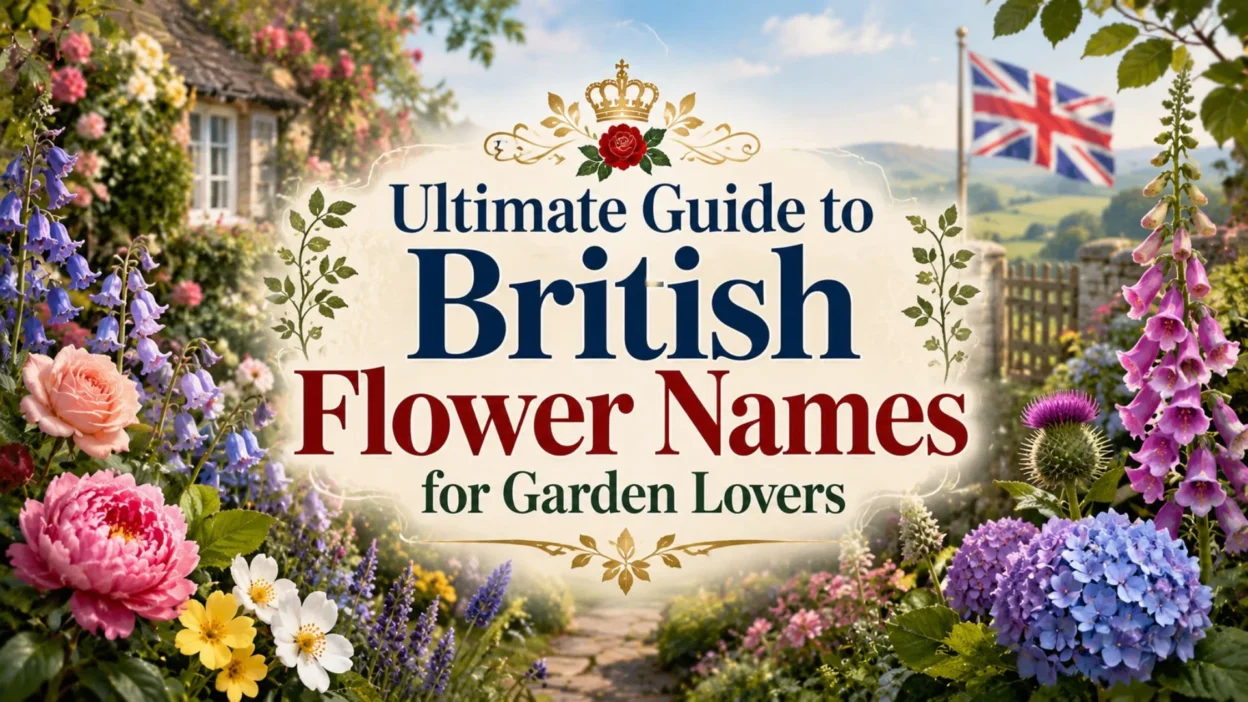
The United Kingdom boasts a rich tapestry of wildflowers and cultivated blooms. British flower names evoke images of rolling countryside, quaint cottage gardens, and stately manor estates. These names carry history, beauty, and a distinctly charming character.
From the delicate Bluebell to the iconic Rose, British flowers have inspired poets, artists, and gardeners for centuries. This guide explores the most beautiful and beloved blossoms found across the UK. Whether you are a gardening enthusiast, a nature lover, or seeking inspiration for a baby name, you will find something to love here.
Which British Flower Names Are Most Popular?
The most popular British flower names include Rose, Lily, Daisy, and Violet. These classic names have deep roots in UK culture and are beloved for their timeless beauty . Bluebell is also a favorite, especially in woodland areas.
Classic British Flower Names for Girls
These timeless names have been cherished for generations. They are elegant and forever in style.
- Rose
- Lily
- Daisy
- Violet
- Iris
- Poppy
- Holly
- Jasmine
- Heather
- Primrose
- Bluebell
- Buttercup
- Foxglove
- Honeysuckle
- Marigold
- Pansy
- Peony
- Sweetpea
- Tulip
- Daffodil
- Snowdrop
- Crocus
- Hyacinth
- Lavender
- Magnolia
- Camellia
- Gardenia
- Azalea
- Begonia
- Clematis
- Delphinium
- Freesia
- Geranium
- Gladiolus
- Hibiscus
- Hydrangea
- Lilac
- Lobelia
- Lupin
- Orchid
- Petunia
- Rhododendron
- Snapdragon
- Sunflower
- Zinnia
- Aster
- Dahlia
- Edelweiss
- Fuchsia
- Gentian
Charming British Wildflowers and Their Names
Wildflowers are the heart of the British countryside. These names connect us to nature’s untamed beauty.
- Bluebell
- Cowslip
- Foxglove
- Primrose
- Buttercup
- Cornflower
- Poppy
- Campion
- Clover
- Daisy
- Forget-me-not
- Harebell
- Heather
- Lady’s Mantle
- Meadowsweet
- Oxeye Daisy
- Ragged Robin
- Red Campion
- Scabious
- Self-heal
- Speedwell
- Stitchwort
- Thistle
- Vetch
- Wood Anemone
- Yellow Rattle
- Agrimony
- Betony
- Bird’s-foot Trefoil
- Bittersweet
- Bramble
- Broom
- Bugle
- Burnet
- Celandine
- Chicory
- Coltsfoot
- Common Mallow
- Cow Parsley
- Cuckooflower
- Dock
- Dove’s-foot
- Feverfew
- Fleabane
- Gipsywort
- Ground Ivy
- Hawkweed
- Heartsease
- Herb Robert
- Knapweed
British Flower Names Inspired by Royal Gardens
The royal gardens of the UK are world-famous. These names carry an air of regal elegance.
- Rose
- Lily
- Iris
- Peony
- Delphinium
- Foxglove
- Hollyhock
- Lavender
- Lupin
- Sweet Pea
- Wisteria
- Clematis
- Honeysuckle
- Jasmine
- Magnolia
- Camellia
- Azalea
- Rhododendron
- Hydrangea
- Dahlia
- Sunflower
- Marigold
- Petunia
- Begonia
- Geranium
- Fuchsia
- Lilac
- Mock Orange
- Philadelphus
- Weigela
- Spirea
- Deutzia
- Escallonia
- Fatsia
- Griselinia
- Hebe
- Olearia
- Pittosporum
- Skimmia
- Viburnum
- Abelia
- Buddleia
- Caryopteris
- Ceanothus
- Choisya
- Cotoneaster
- Daphne
- Elaeagnus
- Euonymus
- Garrya
Unique British Flower Names for Baby Girls
These distinctive floral names are perfect for parents seeking something special. They are rare and beautiful.
- Bluebell
- Cowslip
- Primrose
- Posy
- Snowdrop
- Pansy
- Blossom
- Briar
- Fern
- Hazel
- Ivy
- Linnet
- Meadow
- Myrtle
- Olive
- Petal
- Poppy
- Rosemary
- Sage
- Thistle
- Verbena
- Violet
- Willow
- Wisteria
- Zinnia
- Amaryllis
- Anemone
- Aster
- Azalea
- Camellia
- Celandine
- Chrysanthemum
- Dahlia
- Edelweiss
- Eglantine
- Freesia
- Gardenia
- Gladiolus
- Hibiscus
- Honeysuckle
- Hyacinth
- Jasmine
- Lavender
- Lilac
- Magnolia
- Marigold
- Orchid
- Peony
- Rhododendron
- Tansy
British Flower Names for Boys (Nature-Inspired Options)
While floral names are often associated with girls, many nature-inspired names work beautifully for boys.
- Ash
- Alder
- Birch
- Briar
- Brook
- Cedar
- Clover
- Cypress
- Dale
- Elm
- Fern
- Forrest
- Glen
- Hawthorn
- Heath
- Holly
- Ivy
- Juniper
- Linden
- Maple
- Oak
- Pine
- Rowan
- Sage
- Thorn
- Vale
- Willow
- Woody
- Alfie
- Archie
- Barnaby
- Benedict
- Bertie
- Caspian
- Clive
- Corbin
- Crispin
- Darian
- Elian
- Emrys
- Evan
- Ewan
- Finlay
- Fraser
- Gavin
- Graham
- Harris
- Iain
- Lachlan
- Lyle
British Flower Names from Shakespeare’s Gardens
Shakespeare’s plays are filled with floral references. These names carry literary charm and timeless beauty.
- Rose
- Lily
- Violet
- Pansy
- Carnation
- Columbine
- Cowslip
- Crown Imperial
- Daisy
- Fennel
- Honeysuckle
- Lavender
- Marigold
- Mint
- Poppy
- Primrose
- Rosemary
- Rue
- Saffron
- Sage
- Thyme
- Violet
- Woodbine
- Aconite
- Anemone
- Balm
- Bay
- Bramble
- Broom
- Bugloss
- Burnet
- Celandine
- Chervil
- Chickweed
- Clove
- Coriander
- Cowslip
- Crocus
- Cuckooflower
- Dill
- Eglantine
- Feverfew
- Fig
- Flax
- Fumitory
- Garlic
- Gorse
- Harebell
- Hawthorn
- Heartsease
Seasonal British Flower Names for Every Month
Each season brings its own floral beauty to the UK. These names reflect the changing months.
- Spring Bloomers:
- Snowdrop
- Crocus
- Daffodil
- Tulip
- Bluebell
- Primrose
- Cowslip
- Magnolia
- Camellia
- Azalea
- Lilac
- Apple Blossom
- Cherry Blossom
- Pear Blossom
- Crab Apple
- Blackthorn
- Hawthorn
- Gorse
- Violet
- Heartsease
- Forget-me-not
- Wood Anemone
- Celandine
- Marsh Marigold
- Lady’s Smock
- Garlic Mustard
- Ground Ivy
- Red Dead-nettle
- White Dead-nettle
- Bugle
- Cuckooflower
- Jack-by-the-hedge
- Sweet Violet
- Hairy Bittercress
- Shepherd’s Purse
- Dandelion
- Coltsfoot
- Lesser Celandine
- Wood Sorrel
- Goldilocks
- Summer Bloomers:
- Rose
- Lily
- Peony
- Delphinium
- Lupin
- Poppy
- Cornflower
- Foxglove
- Hollyhock
- Lavender
- Honeysuckle
- Jasmine
- Clematis
- Hydrangea
- Sunflower
- Dahlia
- Marigold
- Petunia
- Geranium
- Begonia
- Fuchsia
- Verbena
- Zinnia
- Aster
- Phlox
- Salvia
- Agapanthus
- Alstroemeria
- Amaryllis
- Campanula
- Canna
- Coreopsis
- Cosmos
- Crocosmia
- Dianthus
- Echinacea
- Eryngium
- Gaillardia
- Gladiolus
- Helenium
- Hemlock
- Honesty
- Iris
- Knapweed
- Liatris
- Lobelia
- Lupin
- Mallow
- Monarda
- Nasturtium
- Autumn Bloomers:
- Dahlia
- Chrysanthemum
- Aster
- Sedum
- Japanese Anemone
- Cyclamen
- Colchicum
- Nerine
- Schizostylis
- Gentian
- Hebe
- Heather
- Ceratostigma
- Autumn Crocus
- Saffron Crocus
- Michaelmas Daisy
- Miscanthus
- Pennisetum
- Rudbeckia
- Helenium
- Echinacea
- Kaffir Lily
- Belladonna Lily
- Sternbergia
- Zantedeschia
- Aconitum
- Amaryllis
- Buddleia
- Cannabis
- Caryopteris
- Centaurea
- Cerinthe
- Cirsium
- Cleome
- Cobaea
- Datura
- Digitalis
- Eccremocarpus
- Fuchsia
- Globe Thistle
- Hibiscus
- Impatiens
- Ipomoea
- Lobelia
- Lunaria
- Mimulus
- Nicotiana
- Oenothera
- Pelargonium
- Penstemon
- Physalis
- Winter Bloomers:
- Snowdrop
- Winter Aconite
- Christmas Rose
- Hellebore
- Camellia
- Mahonia
- Daphne
- Witch Hazel
- Winter Jasmine
- Pansy
- Viola
- Cyclamen
- Bergenia
- Garrya
- Gaultheria
- Hamamelis
- Iris
- Lonicera
- Nandina
- Osmanthus
- Pieris
- Pyracantha
- Sarcococca
- Skimmia
- Strawberry Tree
- Sweet Box
- Viburnum
- Winterberry
- Wintergreen
- Abelia
- Aucuba
- Buxus
- Callicarpa
- Ceratostigma
- Chimonanthus
- Cornus
- Cotoneaster
- Daphne
- Erica
- Euonymus
- Fatsia
- Galanthus
- Griselinia
- Hebe
- Heliotrope
- Helleborus
- Hippophae
- Ilex
- Jasminum
- Laurus
British Flower Names Inspired by the Language of Flowers
In Victorian times, flowers had specific meanings. These names carry beautiful symbolism.
- Rose (Love)
- Lily (Purity)
- Violet (Modesty)
- Daisy (Innocence)
- Rosemary (Remembrance)
- Lavender (Devotion)
- Peony (Healing)
- Tulip (Declaration of Love)
- Sunflower (Adoration)
- Iris (Hope)
- Bluebell (Gratitude)
- Carnation (Fascination)
- Chrysanthemum (Loyalty)
- Daffodil (New Beginnings)
- Forget-me-not (True Love)
- Gardenia (Secret Love)
- Honeysuckle (Affection)
- Hydrangea (Understanding)
- Jasmine (Elegance)
- Lilac (First Love)
- Magnolia (Dignity)
- Marigold (Passion)
- Orchid (Beauty)
- Pansy (Thoughtfulness)
- Poppy (Consolation)
- Primrose (Youth)
- Snapdragon (Deception)
- Sweetpea (Pleasure)
- Verbena (Enchantment)
- Zinnia (Remembrance)
- Aster (Daintiness)
- Azalea (Temperance)
- Begonia (Caution)
- Camellia (Admiration)
- Delphinium (Ardour)
- Eglantine (Spring)
- Foxglove (Insincerity)
- Freesia (Trust)
- Gladiolus (Infatuation)
- Hibiscus (Delicate Beauty)
- Holly (Foresight)
- Hyacinth (Sport)
- Lobelia (Malevolence)
- Lupin (Imagination)
- Marjoram (Joy)
- Mint (Virtue)
- Myrtle (Love)
- Nasturtium (Patriotism)
- Periwinkle (Friendship)
- Phlox (Agreement)
How to Choose the Perfect British Flower Name
Think about your favorite season and the flowers that bloom during it. Consider where you grew up or have special memories. Look at garden design trends for inspiration. Try saying the name out loud to see how it feels.
Why British Flower Names Are So Appealing
British flower names carry history and a sense of place. They bring a little bit of the countryside into everyday life. Many are classic and will never go out of style. These names are perfect for anyone who loves nature and beauty.
FAQs
What are the most common British flower names?
The most common British flower names are Rose, Lily, Daisy, and Violet . These have been popular for many generations. Heather and Poppy are also very common.
Are there any British flower names for boys?
Yes, names like Ash, Rowan, Briar, and Heath work well for boys. Oak, Alder, and Linden are also strong choices. These are inspired by trees and natural elements.
What British flower names are good for a spring baby?
Spring flowers include Primrose, Bluebell, Daffodil, and Snowdrop. Crocus and Tulip are also lovely. These names represent rebirth and new beginnings.
What is the most unusual British flower name?
Unusual names include Cowslip, Foxglove, and Ragged Robin. Heartsease and Cuckooflower are also quite rare. These names are distinctive and charming.
What British flower names are associated with royalty?
Roses, Lilies, and Irises are strongly associated with British royalty. These are the national flowers of England, Wales, and Scotland. They appear in royal coats of arms.
What is the language of flowers and does it matter in the UK?
The language of flowers became very popular in Victorian Britain. Each flower had a specific meaning. It is a lovely way to add depth to a name choice.
Conclusion
Exploring British flower names reveals a world of beauty, history, and charm. From the classic Rose to the unique Bluebell, these names capture the essence of the UK’s natural landscape. They are perfect for anyone seeking a name with meaning, elegance, and a connection to nature. Whether you choose a traditional favorite or a rare wildflower, your choice will always be beautiful.

James Anderson is a passionate floral writer and lifestyle content creator with a love for nature, creativity, and meaningful moments. With a keen eye for beauty and detail, he shares insights on flowers, gifting ideas, floral trends, and special occasion inspiration. Through Florenzay, James aims to help people express emotions and create unforgettable memories through the timeless charm of flowers. 🌸